Hunter Test, from Hunter Evolve, is a premium testosterone booster that takes a high-dose approach. Its six-capsule serving delivers 3,000 mg of D-aspartic acid, 300 mg each of Korean ginseng and ashwagandha, indole-3-carbinol and a full set of supporting nutrients.
Many of those doses are among the highest in the category. That has advantages, and a couple of drawbacks. Here is the full assessment.
Quick verdict
Hunter Test is one of the best-dosed test boosters we have reviewed: 3,000 mg of D-aspartic acid, 300 mg of ashwagandha, 300 mg of Korean ginseng, 30 mg of zinc, 200 mg of magnesium and 10 mg of boron are all at research levels. The drawbacks are six capsules a day, gelatin capsules in the US version, a premium price and 5,000 IU of vitamin D3, above the 4,000 IU daily upper limit. Testogen covers the same ground in four plant-based capsules, with vitamin D3 at the upper limit rather than above it.
Hunter Test pros and cons
What we like about Hunter Test
- 3,000 mg of D-aspartic acid, the top of the research range
- 300 mg of ashwagandha and 300 mg of Korean ginseng
- 30 mg of zinc, 200 mg of magnesium, 10 mg of boron and vitamin K2
- Every dose disclosed
Where Hunter Test falls short
- Six capsules a day
- 5,000 IU of vitamin D3 is above the 4,000 IU adult upper limit
- US capsules contain gelatin
- Premium price
Hunter Test at a glance
| Made by | Hunter Evolve |
|---|---|
| Daily serving | 6 capsules a day |
| Stimulants | Stimulant-free |
| Key ingredients | D-aspartic acid 3 g, Panax ginseng 300 mg, Ashwagandha 300 mg, Indole-3-carbinol 200 mg |
| Label | Every dose disclosed |
| Hyperguides score | 8.3/10 |
What is Hunter Test?
Hunter Test is part of the Hunter Evolve range alongside Hunter Focus and Hunter Burn. Each six-capsule serving contains D-aspartic acid (3,000 mg), Korean ginseng (300 mg), ashwagandha (300 mg standardized to 5% withanolides), indole-3-carbinol (200 mg), magnesium (200 mg), zinc (30 mg), vitamin D3 (5,000 IU), vitamin K2 (150 mcg) and boron (10 mg).
Hunter Test ingredients and doses
Hunter Test discloses every amount. The table compares each dose with the research.
| Ingredient | Per daily serving | What research used | Our read |
|---|---|---|---|
| D-aspartic acid | 3 g | About 2.6 to 3.1 g a day | Research dose |
| Panax ginseng | 300 mg | About 200 to 400 mg of standardized extract for energy; 1.8 to 3 g of red ginseng in sexual function trials | Research dose |
| Ashwagandha (5% withanolides) | 300 mg | 300 to 600 mg a day of a standardized root extract such as KSM-66 | Research dose |
| Indole-3-carbinol | 200 mg | No human dose established | Limited evidence |
| Magnesium (aspartate) | 200 mg | Daily need 420 mg; upper limit 350 mg | 48% of daily need |
| Zinc (aspartate) | 30 mg | Daily need 11 mg; upper limit 40 mg | 273% of daily need |
| Vitamin D3 (5,000 IU) | 125 mcg | Daily need 15 mcg; upper limit 100 mcg | Above upper limit |
| Vitamin K2 (MK-7) | 150 mcg | Daily need 120 mcg | 125% of daily need |
| Boron | 10 mg | 6 to 10 mg a day | Research dose |
D-aspartic acid (3 g)
The case for D-aspartic acid rests largely on a 2009 Italian study in which 23 men taking about 3.1 g a day for 12 days saw testosterone rise by 42% from baseline. Trials in men who already lift weights were less encouraging: 3 g a day for four weeks changed nothing, and 6 g a day for two weeks lowered testosterone. The fair reading is that DAA may help men starting from a low baseline and does little for young, trained men.
The 3 g in Hunter Test is a research-level dose (about 2.6 to 3.1 g a day).
Ashwagandha (300 mg)
The most studied extract, KSM-66, has been tested at 300 to 600 mg a day, with benefits building over eight weeks or more. Trials link it to bigger strength gains in men who train, modest testosterone increases in older men and lower cortisol in people under stress.
Hunter Test's 300 mg sits within the 300 to 600 mg a day of a standardized root extract such as KSM-66 used in the trials. Rare liver injury has been reported; avoid in pregnancy and check with a doctor if you take thyroid or sedative medication.
Vitamin D3 (125 mcg)
Trials show a testosterone benefit only in men who start out deficient. Since most people in northern climates are low for part of the year, a daily 2,000 to 4,000 IU covers the gap without exceeding the 4,000 IU upper limit.
Hunter Test provides 125 mcg, about 833% of the daily requirement. That is above the 100 mcg daily upper limit, so avoid stacking it with other supplements containing vitamin d3.
Panax ginseng (300 mg)
Panax ginseng has reasonable evidence for sexual function: a review of seven trials found red ginseng effective for erectile difficulties at roughly 1.8 to 3 g a day. It has no reliable effect on testosterone itself. Smaller amounts of standardized extract, around 200 mg, have been studied for mental fatigue and performance.
The 300 mg in Hunter Test is a research-level dose (about 200 to 400 mg of standardized extract for energy; 1.8 to 3 g of red ginseng in sexual function trials).
Zinc (30 mg)
Low zinc status is linked to low testosterone, and correcting a shortfall helps. Beyond that, more zinc is not better: the recommended intake for men is 11 mg a day and long-term intake above 40 mg can block copper absorption.
Hunter Test provides 30 mg, about 273% of the daily requirement.
Boron (10 mg)
Boron has a small but interesting evidence base. In a one-week study, eight healthy men taking 10 mg a day saw free testosterone rise and estradiol fall. The study was tiny and short, so boron is a promising supporting ingredient rather than a proven driver. The adult upper limit is 20 mg a day.
Hunter Test's 10 mg sits within the 6 to 10 mg a day used in the trials.
- The US capsules contain gelatin.
- Its 5,000 IU of vitamin D3 is above the 4,000 IU daily upper limit for adults.
Does Hunter Test work?
Hunter Test hits research doses for most of its ingredients. D-aspartic acid at around 3 g raised testosterone in an early study of healthy young men, though later trials in trained men found no change. Ashwagandha at 300 to 600 mg has raised testosterone and lowered stress in several trials, and Korean ginseng at 300 mg supports energy and sexual function. Zinc, magnesium and boron are well dosed for men who are short of them.
Indole-3-carbinol is included to support estrogen metabolism, but it has little human evidence for testosterone. There are no published trials of Hunter Test itself.
Hunter Test side effects
Most men tolerate Hunter Test well. Its 5,000 IU of vitamin D3 is above the 4,000 IU daily upper limit for adults, which matters most if you also take a multivitamin or a separate vitamin D supplement, so check your total intake. Ashwagandha is not recommended for people with thyroid conditions without medical advice, and high-dose magnesium can loosen stools.
Hunter Test price and value
Hunter Test is sold on the Hunter Evolve website and sits at the premium end of the market. Check the official site for the current price. Testogen costs $69.99 for one bottle or $41.99 a bottle on the five-month pack, with a 100-day money-back guarantee.
Hunter Test vs Testogen
| Feature | Hunter Test | Testogen UltimateOur pick |
|---|---|---|
| Hyperguides score | 8.3/10 | 9.3/10 |
| Daily serving | 6 capsules a day | 4 capsules a day |
| Stimulants | Stimulant-free | Stimulant-free |
| Key ingredients | D-aspartic acid 3 g, Panax ginseng 300 mg, Ashwagandha 300 mg, Indole-3-carbinol 200 mg | D-aspartic acid 2,025 mg, KSM-66 ashwagandha 200 mg, vitamin D3 4,000 IU, zinc 25 mg, plus 9 more |
| Label transparency | Every dose disclosed | Every dose disclosed, no blends |
| Price (one bottle) | See official site | $69.99 / 30 days |
| Cost per day | Not available | $2.33 |
| Money-back guarantee | See official site | 100-day money-back guarantee |
Our scores
Hunter Test
Hyperguides score
Testogen Ultimate
Hyperguides score
How we score: formula and dosing 35%, ingredient evidence 25%, label transparency 20%, value and terms 20%. Read our rating method.
Why we recommend Testogen Ultimate
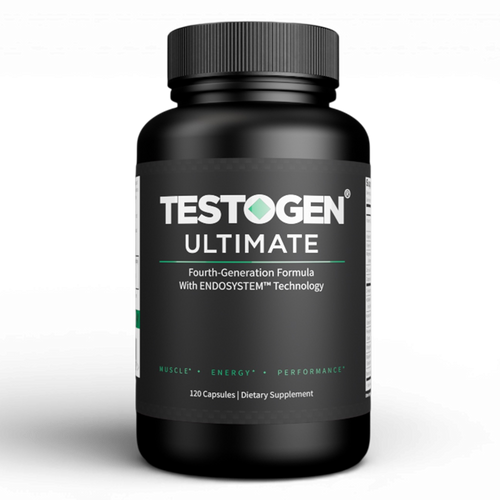
Highest rated test booster
Why we recommend Testogen Ultimate
- Four plant-based capsules a day instead of six gelatin capsules
- 4,000 IU of vitamin D3, at the adult upper limit rather than above it, with vitamin K2
- 2,025 mg of D-aspartic acid, KSM-66 ashwagandha, zinc, magnesium and boron on a fully disclosed label
- $41.99 a bottle on the five-month pack, with a 100-day money-back guarantee
Who should buy Hunter Test?
Hunter Test suits men who want the highest doses available and do not mind six capsules a day or the price. If you prefer fewer capsules, plant-based capsules and vitamin D within the upper limit, Testogen is the more practical choice.
Frequently asked questions
Does Hunter Test work?
Most of its ingredients are at research doses, which makes it one of the stronger formulas available. Results vary, and the product itself has not been tested in a published trial.
How many Hunter Test capsules do you take?
The serving is six capsules a day.
Is Hunter Test safe?
For most healthy men, yes. Its 5,000 IU of vitamin D3 is above the adult upper limit, so avoid taking extra vitamin D alongside it unless a doctor advises it.
What is better than Hunter Test?
We rate Testogen higher for everyday use. It covers the same key ingredients in four plant-based capsules, keeps vitamin D3 within the upper limit and comes with a 100-day money-back guarantee.
Final verdict
Hunter Test is a powerful, transparent formula for men who want maximum doses. Testogen delivers a similar foundation in fewer capsules, with vitamin D3 within the upper limit and a 100-day guarantee, which is why it is our top-rated test booster.
Sources and further reading
- Hunter Test official product page (hunterevolve.com)
- Testogen Ultimate official formula and Supplement Facts
- Chandrasekhar et al. 2012, KSM-66 ashwagandha, stress and cortisol
- Jang et al. 2008, systematic review of red ginseng for erectile function
- Lerchbaum et al. 2017, vitamin D and testosterone in healthy men
- Lopresti et al. 2019, ashwagandha in ageing overweight men
- Melville et al. 2015, three and six grams of D-aspartic acid in trained men
- NIH Office of Dietary Supplements, ashwagandha fact sheet
- NIH Office of Dietary Supplements, boron fact sheet
- NIH Office of Dietary Supplements, vitamin D fact sheet
- NIH Office of Dietary Supplements, zinc fact sheet
- Naghii et al. 2011, boron supplementation and steroid hormones
- Pilz et al. 2011, vitamin D supplementation and testosterone in men
- Prasad et al. 1996, zinc status and serum testosterone
- Reay et al. 2005, Panax ginseng and sustained mental activity
- Topo et al. 2009, D-aspartic acid and LH/testosterone release in men
- Wankhede et al. 2015, ashwagandha and strength training in men
- Willoughby and Leutholtz 2013, D-aspartic acid in resistance-trained men