NeuroQ Memory & Focus is one of the most heavily advertised brain supplements in the US, sold on TV and online by LifeSeasons with a strong pitch to adults worried about memory as they get older. It is a short, fully disclosed formula of six ingredients taken as two capsules a day.
That transparency makes it easy to judge. We checked every ingredient and dose against the human research, looked at what you get for the $89.95 price, and compared it with the brain supplement we rate highest. Here is what we found.
Quick verdict
NeuroQ is a legitimate, clearly labeled supplement, and two of its six ingredients (phosphatidylserine and coffee fruit extract) are at the amounts used in research. The rest are either below effective doses or have weak evidence, and at $89.95 a month it costs more than formulas that do considerably more. It is a reasonable but overpriced choice; ThinkEase gives you a far broader research-dosed formula for less.
NeuroQ pros and cons
What we like about NeuroQ
- Every dose is disclosed, with no proprietary blend
- Phosphatidylserine (100 mg) and coffee fruit extract (100 mg) match the amounts studied
- Very low in caffeine, so it is easy to take with your usual coffee
- Simple routine of two capsules a day
Where NeuroQ falls short
- Expensive at $89.95 for a month, about $3 a day
- No bacopa, citicoline or L-theanine, the best-supported memory and focus ingredients
- Turmeric and gotu kola are below the doses that showed benefits
- Contains bee propolis, so it is not vegan and not suitable for bee allergies
NeuroQ at a glance
| Made by | LifeSeasons |
|---|---|
| Daily serving | 2 capsules a day |
| Stimulants | Minimal (coffee fruit extract) |
| Key ingredients | Gotu kola 250 mg, Turmeric (curcumin) 250 mg, Ginkgo biloba 120 mg, Phosphatidylserine 100 mg |
| Label | Every dose disclosed |
| Price | $89.95 for 30 days ($179.90 on the buy-two-get-one-free offer) |
| Cost per day | $3.00 |
| Hyperguides score | 6.7/10 |
What is NeuroQ?
NeuroQ Memory & Focus is made by LifeSeasons and marketed mainly to adults over 50 who want to stay sharp. Each two-capsule serving combines six ingredients: gotu kola, turmeric, ginkgo biloba, phosphatidylserine, whole coffee fruit extract and bee propolis.
The brand also sells NeuroQ Memory & Focus Extra Strength, Calm Focus capsules and gummies, and a DHA product. This review covers the original Memory & Focus formula, which is the one most people searching for NeuroQ are looking at.
NeuroQ ingredients and doses
NeuroQ lists an exact amount for every ingredient, which deserves credit. The table shows how each dose compares with the amounts used in human studies.
| Ingredient | Per daily serving | What research used | Our read |
|---|---|---|---|
| Gotu kola | 250 mg | 750 mg a day | Low dose |
| Turmeric (curcumin) (95% curcuminoids) | 250 mg | 180 mg a day of a highly absorbable curcumin in the main memory trial | Limited evidence |
| Ginkgo biloba (24% flavone glycosides) | 120 mg | 120 to 240 mg a day | Research dose |
| Phosphatidylserine | 100 mg | 100 to 300 mg a day | Research dose |
| Coffee fruit extract | 100 mg | 100 mg a day | Research dose |
| Bee propolis | 75 mg | No cognitive dose established | Limited evidence |
Phosphatidylserine (100 mg)
Phosphatidylserine has been studied at 100 to 300 mg a day, mainly in older adults with memory complaints, where it produced modest improvements over several months.
At 100 mg, NeuroQ matches the 100 to 300 mg a day used in research.
Coffee fruit extract (100 mg)
A single 100 mg dose of coffee fruit extract raised blood levels of BDNF, a protein involved in learning, in a small study, and later trials in older adults reported modest improvements in reaction time and working memory over several weeks.
At 100 mg, NeuroQ matches the 100 mg a day used in research.
Ginkgo biloba (120 mg)
Ginkgo's large trials have been disappointing. In a six-week study of 230 healthy adults over 60, 120 mg a day did not improve memory, and the GEM study, which gave more than 3,000 older adults 240 mg a day for about six years, found it did not prevent dementia.
NeuroQ's 120 mg sits within the 120 to 240 mg a day used in the trials. Ginkgo can increase bleeding risk alongside blood thinners such as warfarin.
Gotu kola (250 mg)
In a two-month trial in healthy older adults, the highest dose tested, 750 mg a day, improved working memory and mood, while lower doses did little.
With 250 mg per serving, NeuroQ supplies only about 33% of the low end of the 750 mg a day used in research, so this ingredient is unlikely to do much on its own.
Turmeric (curcumin) (250 mg)
Standard curcumin is poorly absorbed. The best memory result used a highly absorbable form, 90 mg twice a day for 18 months, which improved memory and attention in adults aged 50 to 90. Ordinary turmeric extract at a few hundred milligrams is unlikely to match that.
NeuroQ includes 250 mg of standard extract. Because ordinary curcumin is poorly absorbed, that amount is unlikely to match the highly absorbable form used in the memory trial.
Bee propolis (75 mg)
Propolis is studied mainly for antioxidant and anti-inflammatory activity. Human evidence for memory is minimal, and it is unsuitable for anyone allergic to bee products.
NeuroQ includes 75 mg. There is no established effective dose in humans, so treat this ingredient as a bonus rather than a reason to buy.
- Contains bee propolis, so it is unsuitable for people with bee allergies and for vegans.
Does NeuroQ work?
There is no published clinical trial on NeuroQ itself, so any benefit has to come from its ingredients. On that basis, NeuroQ is half right. Phosphatidylserine and coffee fruit extract are both at the amounts used in research, and both have modest evidence for memory and processing speed, mainly in older adults and over several weeks.
The other four ingredients do less. Ginkgo failed to improve memory or prevent dementia in two large, well-run trials. Gotu kola only helped working memory at 750 mg a day, three times NeuroQ's dose, and plain turmeric extract is poorly absorbed compared with the special form used in the best curcumin study. Propolis has almost no human memory data.
So NeuroQ may give subtle support after a month or two, but it is unlikely to feel transformative. It also leaves out the ingredients with the most consistent evidence for memory and attention, such as bacopa and citicoline. If memory changes are worrying you, they are worth raising with a doctor, because thyroid problems, low B12, poor sleep and medication side effects are common and treatable causes.
NeuroQ side effects and safety
NeuroQ's ingredients are generally well tolerated at these doses, and most people notice nothing beyond occasional mild stomach upset. A few points are worth knowing before you buy:
- Ginkgo can increase bleeding risk alongside blood thinners such as warfarin, clopidogrel or daily aspirin.
- Bee propolis can trigger allergic reactions in people sensitive to bee products, and it means the formula is not vegan.
- Turmeric may not suit people with gallbladder problems.
- Coffee fruit extract contains only a trace of caffeine, so it should not keep you awake.
NeuroQ price and value
A single bottle of NeuroQ Memory & Focus costs $89.95 for 30 days on the official store, which works out at about $3 a day. The buy-two-get-one-free offer brings it down to $179.90 for three bottles, or roughly $60 a month.
That is a lot for six ingredients, two of which are at research doses. By comparison, ThinkEase costs $74.99 for a month, or $44.99 a bottle on the five-month pack, and includes 16 ingredients with every dose disclosed.
NeuroQ vs ThinkEase
| Feature | NeuroQ Memory & Focus | ThinkEaseOur pick |
|---|---|---|
| Hyperguides score | 6.7/10 | 9.5/10 |
| Daily serving | 2 capsules a day | 4 capsules a day |
| Stimulants | Minimal (coffee fruit extract) | Caffeine-free |
| Key ingredients | Gotu kola 250 mg, Turmeric (curcumin) 250 mg, Ginkgo biloba 120 mg, Phosphatidylserine 100 mg | Bacopa 300 mg (50% bacosides), citicoline 250 mg, L-theanine 200 mg, phosphatidylserine 100 mg, plus 12 more |
| Label transparency | Every dose disclosed | Every dose disclosed, no blends |
| Price (one bottle) | $89.95 / 30 days | $74.99 / 30 days |
| Cost per day | $3.00 | $2.50 |
| Money-back guarantee | See official site | 100-day money-back guarantee |
Our scores
NeuroQ Memory & Focus
Hyperguides score
ThinkEase
Hyperguides score
How we score: formula and dosing 35%, ingredient evidence 25%, label transparency 20%, value and terms 20%. Read our rating method.
Why we recommend ThinkEase
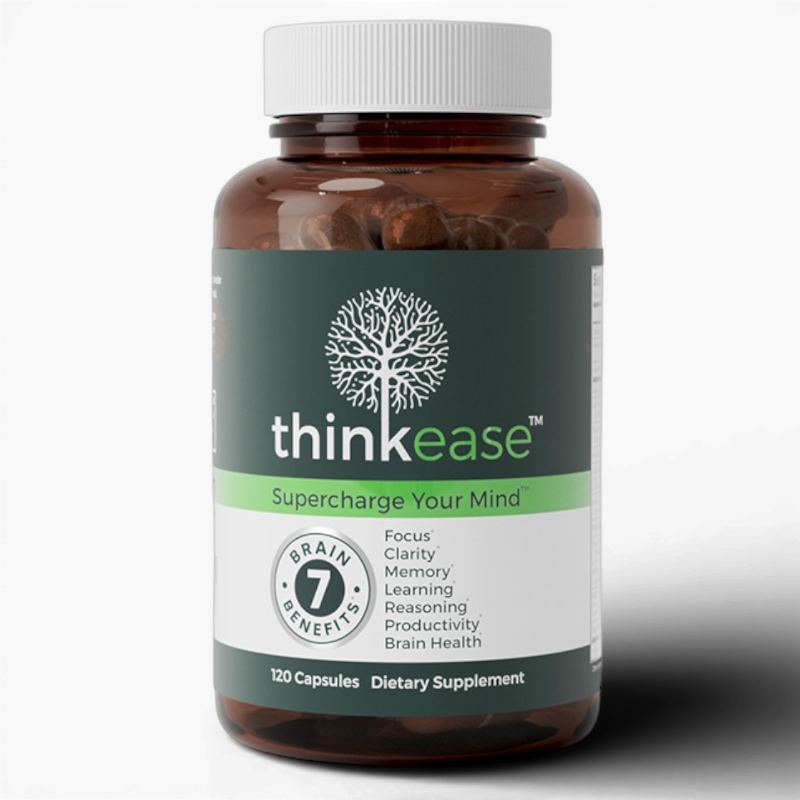
Highest rated nootropic
Why we recommend ThinkEase
- Covers memory and focus with 16 disclosed ingredients, including 300 mg of bacopa and 250 mg of citicoline, which NeuroQ does not have
- Matches NeuroQ on phosphatidylserine (100 mg) and adds L-theanine, rhodiola and saffron at research doses
- Costs less: $74.99 a bottle, or $44.99 on the five-month pack, against $89.95 for NeuroQ
- Caffeine-free, in plant-based capsules, with a 100-day money-back guarantee
Who should buy NeuroQ?
NeuroQ suits someone who wants a short, simple, low-caffeine memory formula and is happy to pay a premium for it. Skip it if you take blood thinners, are allergic to bee products, follow a vegan diet, or want the strongest formula your money can buy.
Frequently asked questions
Does NeuroQ really work?
NeuroQ has not been tested in its own clinical trial. Two of its ingredients, phosphatidylserine and coffee fruit extract, are at doses with modest evidence for memory in older adults, so some people may notice subtle benefits after several weeks. The other ingredients are either underdosed or weakly supported.
What are the side effects of NeuroQ?
Most people tolerate NeuroQ well, with occasional mild stomach upset. Its ginkgo can raise bleeding risk alongside blood-thinning medicines, and its bee propolis can cause allergic reactions in people sensitive to bee products.
How long does NeuroQ take to work?
Based on the research behind its ingredients, allow at least four to eight weeks of daily use. Phosphatidylserine studies ran for months, and coffee fruit extract trials measured changes over several weeks.
Is NeuroQ legitimate?
Yes. NeuroQ is a real product from an established supplement company, and it discloses every ingredient amount. Our concerns are about value and ingredient strength, not legitimacy.
What is a better alternative to NeuroQ?
Our top-rated nootropic is ThinkEase. It includes the same 100 mg of phosphatidylserine plus research-level bacopa, citicoline, L-theanine, rhodiola and saffron, costs less per month and has a 100-day money-back guarantee.
Final verdict
NeuroQ is a clearly labeled supplement with two well-dosed ingredients, but it is expensive for what it contains and misses the best-supported memory and focus ingredients. If you want a single daily brain supplement that covers more ground for less money, ThinkEase is the one we recommend.
Sources and further reading
- NeuroQ Memory & Focus official product page (neuroq.com)
- ThinkEase official formula and Supplement Facts
- DeKosky et al. 2008, ginkgo for prevention of dementia (GEM study)
- Doma et al. 2023, coffee cherry extract with phosphatidylserine
- Kato-Kataoka et al. 2010, phosphatidylserine and memory in older adults
- NCCIH, ginkgo
- Reyes-Izquierdo et al. 2013, coffee fruit extract and BDNF
- Robinson et al. 2020, coffee cherry extract in older adults
- Small et al. 2018, bioavailable curcumin and memory over 18 months
- Solomon et al. 2002, ginkgo for memory in healthy older adults
- Wattanathorn et al. 2008, gotu kola in healthy older adults