Brainol is an online nootropic that packs more than a dozen ingredients into two capsules, from bacopa and phosphatidylserine to guarana, DMAE and St John's wort. It is marketed for focus, memory, energy and mood all at once.
A long list sounds generous, but it also raises safety questions. We reviewed the formula on the label filed with the US National Institutes of Health supplement database.
Quick verdict
We do not recommend Brainol. Several of its ingredients are below research doses, and it combines St John's wort, which interacts with many common medicines, with huperzine A and 20 mg of vitamin B6, above Europe's 12 mg daily upper limit. ThinkEase is a safer, better-dosed daily nootropic with 300 mg of bacopa and 250 mg of citicoline.
Brainol pros and cons
What we like about Brainol
- Every dose disclosed on the filed label
- Includes phosphatidylserine (150 mg) and L-theanine (100 mg)
- 60-day money-back guarantee
Where Brainol falls short
- St John's wort interacts with many medicines, including birth control and antidepressants
- 20 mg of vitamin B6, above Europe's 12 mg daily upper limit
- Bacopa (100 mg) is a third of the research dose
- Contains guarana, so it is not caffeine-free
Brainol at a glance
| Made by | Brainol |
|---|---|
| Daily serving | 2 capsules a day with meals (amounts below are per serving on the 2022 label) |
| Stimulants | Guarana (caffeine source) |
| Key ingredients | St. John's wort 200 mg, L-tyrosine 200 mg, Phosphatidylserine 150 mg, Choline (VitaCholine) 120 mg |
| Label | Disclosed on the label filed in the NIH database (2022) |
| Guarantee | 60-day money-back guarantee |
| Hyperguides score | 6.2/10 |
What is Brainol?
Brainol is sold through its official website. The label filed with the NIH Dietary Supplement Label Database in 2022 lists, per two-capsule serving: St John's wort (200 mg), L-tyrosine (200 mg), phosphatidylserine complex (150 mg), choline bitartrate (120 mg), L-theanine (100 mg), acetyl-L-carnitine (100 mg), DMAE (100 mg), bacopa (100 mg), guarana (60 mg), ginkgo (50 mg), huperzine A (400 mcg) and vitamin B6 (20 mg). Check the current bottle, as formulas change.
Brainol ingredients and doses
The table compares each dose on the filed label with the research.
| Ingredient | Per daily serving | What research used | Our read |
|---|---|---|---|
| St. John's wort | 200 mg | Used for mood, not focus | Limited evidence |
| L-tyrosine | 200 mg | About 2 g as a single dose under stress | Low dose |
| Phosphatidylserine (complex) | 150 mg | 100 to 300 mg a day | Research dose |
| Choline (VitaCholine) (choline bitartrate) | 120 mg | Adequate intake 425 to 550 mg a day from all sources | Limited evidence |
| L-theanine | 100 mg | 100 to 400 mg, most often 200 mg | Research dose |
| Acetyl-L-carnitine | 100 mg | 1.5 to 3 g a day in older adults | Low dose |
| DMAE | 100 mg | No effective dose established | Limited evidence |
| Bacopa monnieri (brahmi) | 100 mg | 300 mg a day of extract standardized to about 50% bacosides (about 150 mg of bacosides) | Low dose |
| Guarana | 60 mg | Counts toward daily caffeine | Limited evidence |
| Ginkgo biloba | 50 mg | 120 to 240 mg a day | Low dose |
| Huperzine A (400 mcg) | 400 mcg | 200 to 400 mcg a day | Research dose |
| Vitamin B6 | 20 mg | Daily need 1.7 mg; upper limit 12 mg | Above upper limit |
St. John's wort (200 mg)
St. John's wort has evidence for mild depression, but it interacts with many medicines, including birth control pills, antidepressants and blood thinners, by speeding up how fast the liver clears them.
Brainol includes 200 mg. There is no established effective dose in humans, so treat this ingredient as a bonus rather than a reason to buy. St. John's wort interacts with many medicines, including birth control, antidepressants and blood thinners.
Bacopa monnieri (100 mg)
The research dose is 300 mg a day of an extract with roughly 40 to 55% bacosides, taken for at least 12 weeks. At that level, trials show modest gains in memory and processing speed, though not every study finds an effect. Taking it with food reduces the mild stomach upset some people notice.
At 100 mg, Brainol falls well below the 300 mg a day of extract standardized to about 50% bacosides (about 150 mg of bacosides) used in the research.
Phosphatidylserine (150 mg)
Phosphatidylserine has been studied at 100 to 300 mg a day, mainly in older adults with memory complaints, where it produced modest improvements over several months.
At 150 mg, Brainol matches the 100 to 300 mg a day used in research.
Huperzine A (400 mcg)
Huperzine A works like a mild version of some dementia drugs. Reviews of trials, mostly from China, suggest benefits in Alzheimer's disease at 200 to 400 mcg a day, but study quality is low. It can cause nausea and a slower heart rate.
The 400 mcg in Brainol is a research-level dose (200 to 400 mcg a day). Because it acts like a drug, it should not be combined with prescription dementia medicines.
L-tyrosine (200 mg)
A 2015 review concluded that tyrosine can protect working memory and focus during acute stress, such as cold exposure, sleep loss or multitasking, using single doses of around 2 g or more. It does little under ordinary conditions. The N-acetyl form dissolves more easily but converts to tyrosine less efficiently.
At 200 mg, Brainol falls well below the about 2 g as a single dose under stress used in the research.
L-theanine (100 mg)
In a four-week trial, 200 mg of L-theanine a day reduced stress-related symptoms and improved verbal fluency and executive function in healthy adults. Paired with caffeine it shines: several trials show the combination sharpens attention and takes the jittery edge off caffeine alone.
At 100 mg, Brainol matches the 100 to 400 mg, most often 200 mg used in research.
Brainol safety concerns
St John's wort is an herbal antidepressant that speeds up the breakdown of many drugs, which can make birth control pills, blood thinners, HIV medicines and some heart drugs less effective, and it can cause a dangerous reaction with prescription antidepressants. That is a significant risk in a product marketed for focus.
Brainol's 20 mg of vitamin B6 is above the 12 mg daily upper limit set by the European Food Safety Authority in 2023, because of the risk of nerve damage with long-term high intake. Huperzine A at 400 mcg can cause nausea and a slower heart rate and should not be combined with dementia medicines. Guarana adds caffeine.
Does Brainol work?
Some ingredients are useful, including phosphatidylserine at 150 mg and L-theanine at 100 mg. Most of the rest are below research doses: bacopa is 100 mg against 300 mg in trials, acetyl-L-carnitine 100 mg against 1.5 to 3 g, and ginkgo 50 mg against 120 to 240 mg. DMAE has no good modern evidence. There are no published trials of Brainol itself.
Brainol price and value
Brainol is sold on its official site with a 60-day money-back guarantee. Given the interaction risks and low doses, we would not buy it at any price. ThinkEase costs $74.99 a month, or $44.99 a bottle on the five-month pack, with a 100-day guarantee.
Brainol vs ThinkEase
| Feature | Brainol | ThinkEaseOur pick |
|---|---|---|
| Hyperguides score | 6.2/10 | 9.5/10 |
| Daily serving | 2 capsules a day with meals (amounts below are per serving on the 2022 label) | 4 capsules a day |
| Stimulants | Guarana (caffeine source) | Caffeine-free |
| Key ingredients | St. John's wort 200 mg, L-tyrosine 200 mg, Phosphatidylserine 150 mg, Choline (VitaCholine) 120 mg | Bacopa 300 mg (50% bacosides), citicoline 250 mg, L-theanine 200 mg, phosphatidylserine 100 mg, plus 12 more |
| Label transparency | Disclosed on the label filed in the NIH database (2022) | Every dose disclosed, no blends |
| Price (one bottle) | See official site | $74.99 / 30 days |
| Cost per day | Not available | $2.50 |
| Money-back guarantee | 60-day money-back guarantee | 100-day money-back guarantee |
Our scores
Brainol
Hyperguides score
ThinkEase
Hyperguides score
How we score: formula and dosing 35%, ingredient evidence 25%, label transparency 20%, value and terms 20%. Read our rating method.
Why we recommend ThinkEase
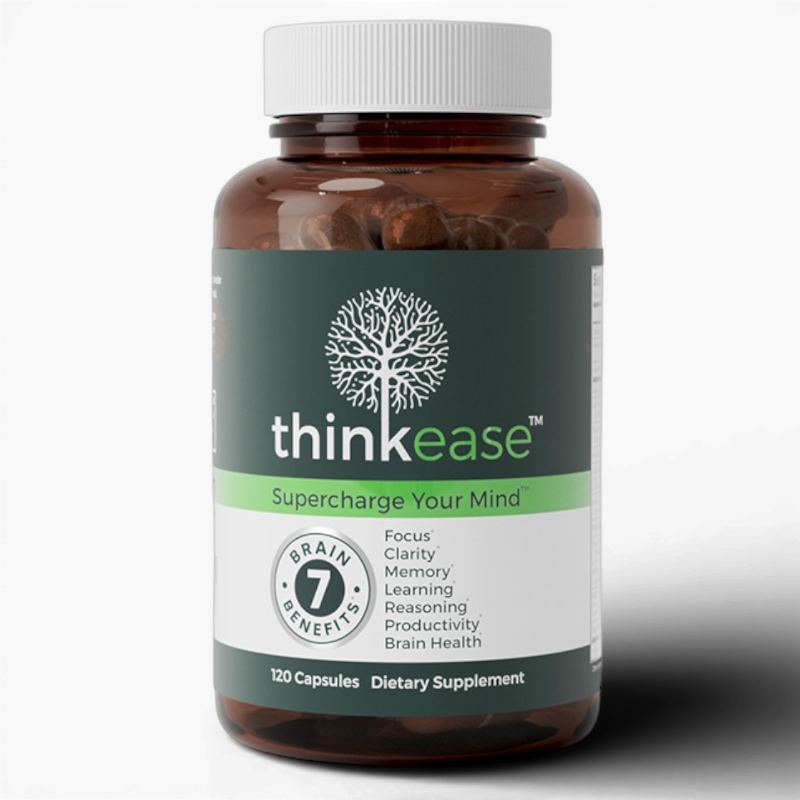
Highest rated nootropic
Why we recommend ThinkEase
- No St John's wort or huperzine A, so no common drug interactions to worry about
- A sensible 2.5 mg of vitamin B6, well within safe limits
- 300 mg of bacopa, 250 mg of citicoline and 100 mg of phosphatidylserine at research doses
- Caffeine-free, with a 100-day money-back guarantee
Frequently asked questions
What are the side effects of Brainol?
Possible side effects include nausea, headache and trouble sleeping. Its St John's wort interacts with many medicines, including birth control, antidepressants and blood thinners.
Is Brainol safe?
It is not a good choice for anyone taking prescription medication, because of its St John's wort. Its 20 mg of vitamin B6 is also above Europe's daily upper limit.
What is better than Brainol?
ThinkEase is our top-rated nootropic. It contains no St John's wort or huperzine A, keeps vitamin B6 low and includes research-level bacopa and citicoline.
Final verdict
Brainol's long label hides real interaction risks and mostly low doses. For a safe, well-dosed daily nootropic, ThinkEase is the one we recommend.
Sources and further reading
- Brainol official site (brainol.com)
- NIH DSLD label record for Brainol (2022)
- NCCIH on St. John's wort interactions
- ThinkEase official formula and Supplement Facts
- Calabrese et al. 2008, bacopa in adults over 65
- European Food Safety Authority 2023, upper intake level for vitamin B6
- Giesbrecht et al. 2010, L-theanine and caffeine on task switching
- Haskell et al. 2008, L-theanine, caffeine and their combination
- Hidese et al. 2019, four weeks of L-theanine in healthy adults
- Jongkees et al. 2015, review of tyrosine under stress
- Kato-Kataoka et al. 2010, phosphatidylserine and memory in older adults
- Kongkeaw et al. 2014, meta-analysis of bacopa trials
- Li et al. 2008, Cochrane review of huperzine A
- Lopresti et al. 2025, 12-week Bacumen bacopa trial
- Owen et al. 2008, L-theanine with caffeine on attention
- Stough et al. 2001, 12 weeks of bacopa in healthy adults
- Yang et al. 2013, meta-analysis of huperzine A trials