Many women notice that their memory and concentration slip during the menopause transition: losing words mid-sentence, forgetting appointments, finding it harder to focus. It is common, and for most women it is temporary.
This guide explains why it happens, what helps most, which supplements and adaptogens have evidence, and the products we rate highest.
Quick verdict
ThinkEase is our top pick for brain fog around menopause. Its research doses of bacopa, citicoline and phosphatidylserine support memory, and its L-theanine, rhodiola and saffron support calm focus, mood and mental energy, with no caffeine. MindVitality Focus is a good alternative if stress and fatigue are your main problems, because it includes ashwagandha, the adaptogen with the best menopause evidence.
Menopause brain fog supplements pros and cons
What we like
- Ashwagandha reduced menopausal symptoms in a placebo-controlled trial
- Saffron and L-theanine support mood and calm focus
- Bacopa, citicoline and phosphatidylserine have memory evidence
- Caffeine-free options will not add to sleep problems
What could be better
- Supplement trials in menopausal women are few and small
- Hot flashes and broken sleep need addressing directly
- Hormone therapy is a separate decision to discuss with your doctor
- Bacopa takes eight to twelve weeks to work
Why menopause affects memory
Estrogen helps regulate brain areas involved in memory and attention, and its levels swing and then fall during perimenopause. In the SWAN study, which followed more than 2,000 midlife women, the improvement women normally show when repeating memory and processing-speed tests stalled during the menopause transition and returned after menopause. That suggests the change is usually temporary.
Hot flashes and night sweats also break up sleep, and poor sleep alone is enough to cause brain fog. Stress, low mood and anxiety, which are common at this stage, add to it.
What helps most
Start with sleep: managing night sweats, keeping the bedroom cool and limiting alcohol and late caffeine all help. Regular exercise improves mood, sleep and thinking. If symptoms are affecting your life, talk to your doctor about treatment options, including hormone therapy, which can relieve hot flashes and night sweats. A supplement works best on top of these basics.
Adaptogens and supplements with evidence
- Ashwagandha: in an eight-week trial of 100 perimenopausal women, 600 mg a day of a root extract reduced hot flashes and psychological symptoms such as irritability and low mood compared with placebo.
- Rhodiola: reduced fatigue and improved concentration in adults with stress-related fatigue at 576 mg a day for four weeks.
- Saffron: 28 mg a day improved mood and stress in healthy adults with low mood in a four-week trial.
- L-theanine: 200 mg a day reduced stress-related symptoms in a four-week trial.
- Bacopa, citicoline and phosphatidylserine: the best-supported ingredients for memory in general, although they have not been tested in menopausal women specifically.
Other adaptogens marketed for menopause, such as maca, have far less evidence.
1. ThinkEase: best overall
ThinkEase combines 300 mg of bacopa, 250 mg of citicoline and 100 mg of phosphatidylserine for memory with 200 mg each of L-theanine and rhodiola and 30 mg of saffron for calm focus, mood and mental energy. It is caffeine-free, so it will not add to sleep problems, and costs $74.99 a month or $44.99 a bottle on the five-month pack, with a 100-day money-back guarantee. Read our ThinkEase review.
2. MindVitality Focus: best for stress and fatigue
Of our top picks, MindVitality Focus is the one with ashwagandha: 250 mg, alongside 250 mg of rhodiola and 100 mg of phosphatidylserine. Its ashwagandha is below the 600 mg used in the menopause trial, so think of it as support rather than a match for that study. It is caffeine-free and costs $59.99 a month, or $35.99 a bottle on the five-month pack, with a 100-day money-back guarantee. Read our MindVitality review.
3. Rootana Pure Mind: budget pick
Pure Mind has the same ingredients as ThinkEase, including saffron, L-theanine and rhodiola, at three quarters of the amount per serving, for $39.99 a bottle or $29.99 on the 3 + 1 free pack. Read our Pure Mind review.
Our three picks side by side
| Feature | ThinkEaseOur pick | MindVitality FocusOur pick | Rootana Pure MindOur pick |
|---|---|---|---|
| Hyperguides score | 9.5/10 | 8.6/10 | 9.1/10 |
| Daily serving | 4 capsules a day | 3 tablets a day with breakfast or lunch | 3 capsules a day (4 for a stronger dose) |
| Stimulants | Caffeine-free | Caffeine-free | Caffeine-free |
| Key ingredients | Bacopa 300 mg (50% bacosides), citicoline 250 mg, L-theanine 200 mg, phosphatidylserine 100 mg, plus 12 more | Lion's mane 500 mg, bacopa 300 mg, rhodiola 250 mg, ashwagandha 250 mg, plus 13 more | Bacopa 225 mg, citicoline 187.5 mg, L-theanine 150 mg, rhodiola 150 mg, plus 12 more |
| Label transparency | Every dose disclosed, no blends | Every dose disclosed, no blends | Every dose disclosed, no blends |
| Price (one bottle) | $74.99 / 30 days | $59.99 / 30 days | $39.99 / 28 days |
| Cost per day | $2.50 | $2.00 | $1.43 |
| Money-back guarantee | 100-day money-back guarantee | 100-day money-back guarantee | Unopened bottles can be returned within 30 days (US and Canada) |
Our scores
ThinkEase
Hyperguides score
MindVitality Focus
Hyperguides score
Rootana Pure Mind
Hyperguides score
How we score: formula and dosing 35%, ingredient evidence 25%, label transparency 20%, value and terms 20%. Read our rating method.
Why we recommend ThinkEase
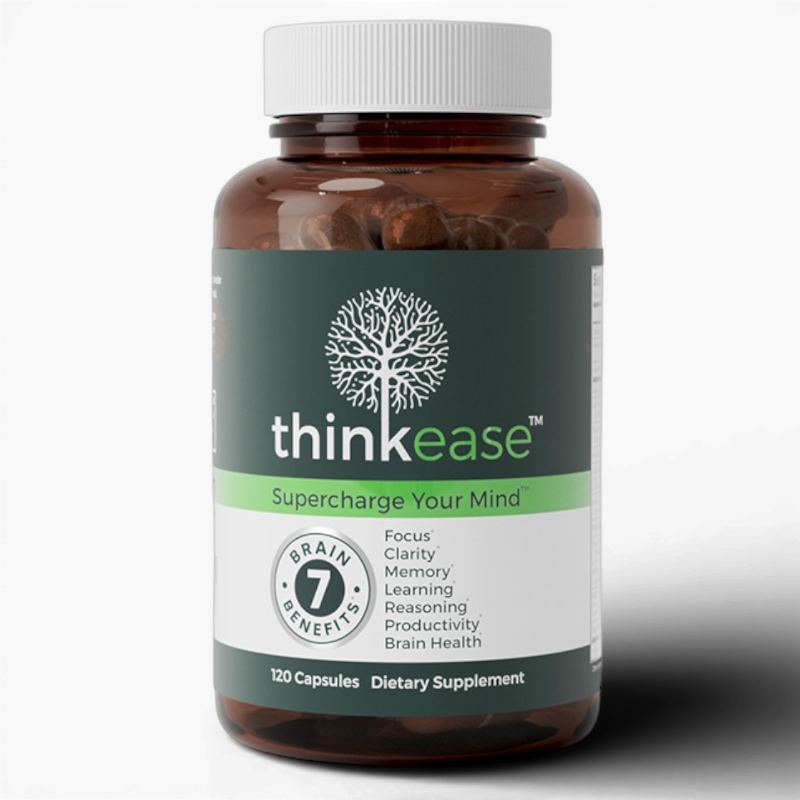
Highest rated nootropic
Why we recommend ThinkEase
- Bacopa, citicoline and phosphatidylserine at research doses for memory
- L-theanine, rhodiola and saffron for calm focus, mood and mental energy
- Caffeine-free, so it will not add to sleep problems
- A 100-day money-back guarantee, long enough to judge the slower-acting ingredients
Frequently asked questions
Is menopause brain fog real?
Yes. Memory and concentration problems are common during the menopause transition, and studies have measured the change. For most women it improves after menopause.
How long does menopause brain fog last?
For most women it is worst during perimenopause and improves after menopause, although the timing varies widely.
What is the best supplement for menopause brain fog?
We rate ThinkEase highest, for its research doses of bacopa, citicoline and phosphatidylserine with L-theanine, rhodiola and saffron. MindVitality Focus is the alternative with ashwagandha.
Which adaptogens help with menopause?
Ashwagandha has the best evidence, with a placebo-controlled trial showing fewer hot flashes and psychological symptoms at 600 mg a day. Rhodiola has evidence for stress-related fatigue. Maca and other adaptogens have much less.
Can supplements replace hormone therapy?
No. Hormone therapy is a medical treatment that can relieve hot flashes and night sweats, and whether it suits you is a decision to make with your doctor. Supplements can support memory, mood and energy alongside it.
Final verdict
Menopause brain fog is common and usually temporary, and it responds best to better sleep, less stress and treatment of night sweats. On top of those basics, ThinkEase is the supplement we rate highest, with MindVitality Focus a good choice when stress and fatigue are part of the picture.
Sources and further reading
- ThinkEase official formula and Supplement Facts
- MindVitality Focus official site and Supplement Facts
- Rootana Pure Mind official product page and Supplement Facts
- Calabrese et al. 2008, bacopa in adults over 65
- Chandrasekhar et al. 2012, KSM-66 ashwagandha, stress and cortisol
- Darbinyan et al. 2000, rhodiola in night-shift physicians
- Docherty et al. 2023, lion's mane in young adults
- Giesbrecht et al. 2010, L-theanine and caffeine on task switching
- Gopal et al. 2021, ashwagandha and menopausal symptoms in perimenopause
- Greendale et al. 2009, cognitive performance across the menopause transition (SWAN)
- Haskell et al. 2008, L-theanine, caffeine and their combination
- Hidese et al. 2019, four weeks of L-theanine in healthy adults
- Jang et al. 2008, systematic review of red ginseng for erectile function
- Jongkees et al. 2015, review of tyrosine under stress
- Kato-Kataoka et al. 2010, phosphatidylserine and memory in older adults
- Kell et al. 2017, affron saffron extract and mood
- Kongkeaw et al. 2014, meta-analysis of bacopa trials
- Lopresti et al. 2019, ashwagandha in ageing overweight men
- Lopresti et al. 2025, 12-week Bacumen bacopa trial
- McGlade et al. 2019, citicoline, attention and motor speed
- Montgomery et al. 2003, meta-analysis of acetyl-L-carnitine trials
- Mori et al. 2009, lion's mane in mild cognitive impairment
- NIH Office of Dietary Supplements, ashwagandha fact sheet
- Nakazaki et al. 2021, citicoline and memory in healthy older adults
- Olsson et al. 2009, rhodiola in stress-related fatigue
- Owen et al. 2008, L-theanine with caffeine on attention
- Reay et al. 2005, Panax ginseng and sustained mental activity
- Stough et al. 2001, 12 weeks of bacopa in healthy adults
- Wankhede et al. 2015, ashwagandha and strength training in men