Qualia Mind, from Neurohacker Collective, is the most ambitious nootropic most people will come across. The current version, Qualia Mind 2.0, packs around 30 ingredients into six capsules, from rhodiola and L-theanine to lion's mane, saffron and a full set of B vitamins, and it costs $159 a bottle.
We checked every dose on the 2.0 label against the research, worked out what a serving really costs, and compared it with ThinkEase, our top-rated nootropic.
Quick verdict
Qualia Mind 2.0 is a serious, fully disclosed formula with several ingredients at research doses, including 370 mg of rhodiola, 200 mg of L-theanine, 30 mg of saffron and the studied amounts of lutein and zeaxanthin. The drawbacks are cost (about $7.95 a serving), six capsules a day, 100 mg of caffeine and two notable gaps: no bacopa and only 50 mg of citicoline. ThinkEase covers the core research ingredients, adds bacopa, and costs less than a third as much per serving.
Qualia Mind pros and cons
What we like about Qualia Mind
- Every dose disclosed across about 30 ingredients
- Rhodiola (370 mg), L-theanine (200 mg) and saffron (30 mg) at research doses
- Lion's mane as an 8:1 extract, roughly equal to 1 g of whole mushroom
- 100-day money-back guarantee
Where Qualia Mind falls short
- $159 for 20 servings, about $7.95 a serving at the one-off price
- Six capsules a day, taken five days a week
- 100 mg of caffeine, so it is not for afternoons or caffeine-sensitive people
- No bacopa, and citicoline is only 50 mg against 250 mg in research
Qualia Mind at a glance
| Made by | Qualia (Neurohacker Collective) |
|---|---|
| Daily serving | 6 capsules on 5 days a week |
| Stimulants | 100 mg caffeine |
| Key ingredients | Acetyl-L-carnitine 500 mg, Rhodiola rosea 370 mg, Nutricog (terminalia and boswellia) 300 mg, N-acetyl L-tyrosine 250 mg |
| Label | Every dose disclosed |
| Price | $159.00 for 28 days ($139 a month on subscription after a $39 first shipment) |
| Cost per day | $5.68 |
| Guarantee | 100-day money-back guarantee |
| Hyperguides score | 7.7/10 |
What is Qualia Mind?
Qualia Mind is the flagship product of Neurohacker Collective, now sold under the Qualia brand. Its pitch is a complete "stack" in one bottle, so you do not have to buy and combine individual nootropics yourself.
The 2.0 formula is taken as six vegetarian capsules in the morning, five days a week, with two days off. A bottle holds 20 servings, so it lasts about four weeks on that schedule. The ingredients fall into a few groups:
- Vitamins and minerals: vitamin C, vitamin D, seven B vitamins, magnesium and boron
- Amino acids: acetyl-L-carnitine, N-acetyl L-tyrosine, taurine and L-theanine
- Choline sources: alpha-GPC, citicoline (Cognizin) and phosphatidylserine
- Herbs and mushrooms: rhodiola, ginkgo, lion's mane, saffron, Polygala, Celastrus (SmartSeed), Oroxylum (Sabroxy) and Nutricog
- Other: caffeine from coffee fruit, guarana and caffeine anhydrous, plus PQQ and Lutemax Brain lutein and zeaxanthin
Older versions of Qualia Mind included ingredients such as bacopa, velvet bean and huperzia. Version 2.0 does not, so check that any review you read describes the current formula.
Qualia Mind ingredients and doses
The table below covers the main ingredients on the 2.0 label and compares each amount with the doses used in research.
| Ingredient | Per daily serving | What research used | Our read |
|---|---|---|---|
| Acetyl-L-carnitine | 500 mg | 1.5 to 3 g a day in older adults | Low dose |
| Rhodiola rosea (3% rosavins, 1% salidrosides) | 370 mg | 170 to 600 mg a day of standardized extract | Research dose |
| Nutricog (terminalia and boswellia) | 300 mg | No independent dose data | Limited evidence |
| N-acetyl L-tyrosine | 250 mg | About 2 g of tyrosine under stress | Low dose |
| Taurine | 200 mg | 1 to 3 g a day for exercise | Low dose |
| L-theanine | 200 mg | 100 to 400 mg, most often 200 mg | Research dose |
| Lion's mane (8:1 extract) | 125 mg | 1 to 3 g a day of mushroom | Research dose |
| Ginkgo biloba (24% glycosides) | 120 mg | 120 to 240 mg a day | Research dose |
| Alpha-GPC | 115 mg | 300 to 600 mg a day in supplements (1,200 mg in dementia trials) | Low dose |
| Caffeine (coffee fruit, guarana and anhydrous) | 100 mg | 75 to 200 mg for alertness (400 mg daily ceiling) | Research dose |
| Phosphatidylserine (from sunflower lecithin) | 100 mg | 100 to 300 mg a day | Research dose |
| Polygala tenuifolia | 100 mg | No established dose | Limited evidence |
| Celastrus paniculatus (SmartSeed) | 90 mg | No human dose established | Limited evidence |
| Citicoline (Cognizin) | 50 mg | 250 to 500 mg a day | Low dose |
| Oroxylum indicum (Sabroxy) | 50 mg | No human dose established | Limited evidence |
| Saffron extract | 30 mg | 28 to 30 mg a day | Research dose |
| Lutein | 10 mg | 10 to 20 mg a day with zeaxanthin | Research dose |
| PQQ | 10 mg | 20 mg a day | Moderate dose |
| Boron | 3 mg | 6 to 10 mg a day | Moderate dose |
| Zeaxanthin | 2 mg | About 2 mg a day with lutein | Research dose |
| Vitamin D3 (600 IU) | 15 mcg | Daily need 15 mcg; upper limit 100 mcg | 100% of daily need |
| Vitamin B12 | 100 mcg | Daily need 2.4 mcg | 4,167% of daily need |
| Magnesium (aspartate) | 84 mg | Daily need 420 mg; upper limit 350 mg | 20% of daily need |
Rhodiola rosea (370 mg)
Rhodiola is one of the better supported adaptogens for fatigue. Studies have used 170 to 600 mg a day of standardized extract, with effects on mental fatigue appearing within two to four weeks.
At 370 mg, Qualia Mind matches the 170 to 600 mg a day of standardized extract used in research.
L-theanine (200 mg)
Studies have used 100 to 400 mg a day, most often 200 mg. On its own L-theanine eases stress and supports sleep quality; with caffeine it improves accuracy and attention more than caffeine does by itself.
The 200 mg in Qualia Mind is a research-level dose (100 to 400 mg, most often 200 mg).
Caffeine (100 mg)
Caffeine reliably improves alertness and attention at 75 to 200 mg, which is why it appears in so many focus products. The trade-off is tolerance, possible jitters and disturbed sleep if taken late in the day. The FDA considers up to 400 mg a day from all sources generally safe for healthy adults.
At 100 mg, Qualia Mind matches the 75 to 200 mg for alertness (400 mg daily ceiling) used in research.
Acetyl-L-carnitine (500 mg)
Acetyl-L-carnitine's cognitive evidence comes mostly from older adults with mild cognitive impairment: a meta-analysis of 21 trials using 1.5 to 3 g a day found benefits over placebo. Evidence in healthy younger adults is thin, so smaller doses are best seen as support for mental energy rather than a memory treatment.
With 500 mg per serving, Qualia Mind supplies only about 33% of the low end of the 1.5 to 3 g a day in older adults used in research, so this ingredient is unlikely to do much on its own.
Phosphatidylserine (100 mg)
In a six-month trial, older adults with memory complaints taking 100 or 300 mg of soy-derived phosphatidylserine a day improved on memory tests, especially those who started with lower scores. The FDA allows only a qualified health claim for it, describing the evidence as limited.
The 100 mg in Qualia Mind is a research-level dose (100 to 300 mg a day).
Citicoline (50 mg)
Studies have used 250 to 500 mg a day. The clearest results are modest improvements in memory and attention, mostly seen over several weeks of daily use and in older adults.
50 mg is well short of the 250 to 500 mg a day that was studied, which makes it a supporting player rather than a driver.
- The label also includes vitamin C, thiamine, riboflavin, niacin, vitamin B6, folate, biotin and pantothenic acid.
- The maker recommends taking it five days a week with two days off, so a 20-serving bottle lasts about four weeks.
Does Qualia Mind work?
Several of Qualia Mind's ingredients are present at amounts that have worked in human studies. The 100 mg of caffeine with 200 mg of L-theanine is a well-studied pairing for alertness and attention, and you will feel it within an hour. Rhodiola at 370 mg is in the range used for fatigue and stress, saffron at 30 mg matches the mood research, and 10 mg of lutein with 2 mg of zeaxanthin matches the Lutemax studies.
Other parts of the formula are lighter. Acetyl-L-carnitine (500 mg) is a third of the lower research dose, alpha-GPC (115 mg) and citicoline (50 mg) are both well below the amounts studied, and the newer herbal ingredients such as Sabroxy, SmartSeed and Polygala have very little human research behind them. The biggest gap is bacopa, the most researched herb for memory, which Qualia Mind 2.0 does not contain.
Qualia Mind side effects
Take Qualia Mind early in the day because of the caffeine. If you already drink coffee, count it toward your total. Ginkgo can increase bleeding risk, so speak to a doctor first if you take blood thinners. Some people find six capsules at once causes mild nausea, and taking them with breakfast usually helps.
Qualia Mind price and value
Qualia Mind 2.0 costs $159 for a one-off bottle of 20 servings, or $139 a month on subscription after a $39 first shipment. That works out at about $7.95 a serving at the full price and $6.95 on subscription.
ThinkEase costs $74.99 for 30 servings, about $2.50 a day, or $44.99 a bottle on the five-month pack, about $1.50 a day. Both come with a 100-day money-back guarantee.
Qualia Mind vs ThinkEase
| Feature | Qualia Mind 2.0 | ThinkEaseOur pick |
|---|---|---|
| Hyperguides score | 7.7/10 | 9.5/10 |
| Daily serving | 6 capsules on 5 days a week | 4 capsules a day |
| Stimulants | 100 mg caffeine | Caffeine-free |
| Key ingredients | Acetyl-L-carnitine 500 mg, Rhodiola rosea 370 mg, Nutricog (terminalia and boswellia) 300 mg, N-acetyl L-tyrosine 250 mg | Bacopa 300 mg (50% bacosides), citicoline 250 mg, L-theanine 200 mg, phosphatidylserine 100 mg, plus 12 more |
| Label transparency | Every dose disclosed | Every dose disclosed, no blends |
| Price (one bottle) | $159.00 / 28 days | $74.99 / 30 days |
| Cost per day | $5.68 | $2.50 |
| Money-back guarantee | 100-day money-back guarantee | 100-day money-back guarantee |
Our scores
Qualia Mind 2.0
Hyperguides score
ThinkEase
Hyperguides score
How we score: formula and dosing 35%, ingredient evidence 25%, label transparency 20%, value and terms 20%. Read our rating method.
Why we recommend ThinkEase
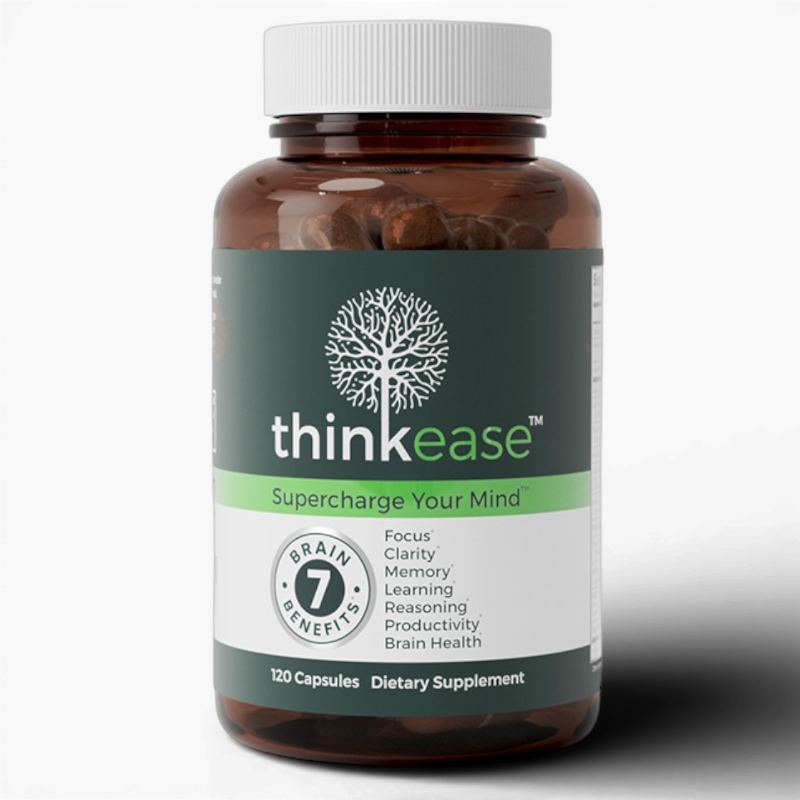
Highest rated nootropic
Why we recommend ThinkEase
- 300 mg of bacopa at 50% bacosides, the most researched memory herb, which Qualia Mind 2.0 leaves out
- Five times the citicoline (250 mg against 50 mg) and more acetyl-L-carnitine (750 mg against 500 mg)
- The same 200 mg of L-theanine, 100 mg of phosphatidylserine and 30 mg of saffron, with no caffeine
- About $2.50 a day against $7.95, with the same 100-day money-back guarantee
Who should buy Qualia Mind?
Qualia Mind suits people who want a single product that includes caffeine, B vitamins and a long list of herbs, and who are happy with six capsules and a premium price. If you want the ingredients with the strongest evidence, including bacopa, without caffeine and at a far lower cost, ThinkEase is the better buy.
Frequently asked questions
How much caffeine is in Qualia Mind?
Qualia Mind 2.0 contains 100 mg of caffeine per six-capsule serving, from coffee fruit, guarana and caffeine anhydrous. That is about the same as a cup of coffee.
Why does Qualia Mind say to take two days off?
The maker recommends taking it five days a week with two days off. A 20-serving bottle therefore lasts about four weeks.
Does Qualia Mind contain bacopa?
No. Earlier versions did, but the current Qualia Mind 2.0 label does not list bacopa.
How much does Qualia Mind cost?
A one-off bottle costs $159 for 20 servings. On subscription it costs $139 a month after a $39 first shipment.
What is a cheaper alternative to Qualia Mind?
ThinkEase is our top-rated nootropic. It includes 300 mg of bacopa, 250 mg of citicoline, 200 mg of L-theanine and 30 mg of saffron in four caffeine-free capsules, costs $74.99 a month and has a 100-day money-back guarantee.
Final verdict
Qualia Mind 2.0 is a well-made, transparent formula, and some of its doses are excellent. But at nearly $8 a serving, with caffeine, six capsules and no bacopa, it is hard to justify over a simpler formula that covers the strongest ingredients. For a daily nootropic, ThinkEase is the one we recommend.
Sources and further reading
- Qualia Mind 2.0 official Supplement Facts and pricing (qualialife.com)
- Qualia Mind official directions (qualialife.com)
- ThinkEase official formula and Supplement Facts
- Darbinyan et al. 2000, rhodiola in night-shift physicians
- Giesbrecht et al. 2010, L-theanine and caffeine on task switching
- Haskell et al. 2008, L-theanine, caffeine and their combination
- Hidese et al. 2019, four weeks of L-theanine in healthy adults
- Kato-Kataoka et al. 2010, phosphatidylserine and memory in older adults
- McGlade et al. 2019, citicoline, attention and motor speed
- Michael et al. 2008, caffeine and alertness
- Montgomery et al. 2003, meta-analysis of acetyl-L-carnitine trials
- Nakazaki et al. 2021, citicoline and memory in healthy older adults
- Olsson et al. 2009, rhodiola in stress-related fatigue
- Owen et al. 2008, L-theanine with caffeine on attention
- US FDA, how much caffeine is too much