Nooceptin is a caffeine-free nootropic sold online, positioned as a daily supplement for focus, memory and mental clarity. Its formula is compact: seven well-known ingredients, including citicoline, bacopa, lion's mane, Panax ginseng, L-theanine, rhodiola and ginkgo, with every dose on the label.
We checked each of those doses against the research and compared Nooceptin with our top-rated nootropic.
Quick verdict
Nooceptin is a solid, transparent formula. Its 200 mg each of citicoline, Panax ginseng and L-theanine are close to or at research doses, and its lion's mane is a concentrated extract. The weak spots are bacopa (150 mg at 40% bacosides, well under the studied amount of bacosides) and the absence of phosphatidylserine. ThinkEase delivers 300 mg of bacopa at 50% bacosides, 250 mg of citicoline and 100 mg of phosphatidylserine.
Nooceptin pros and cons
What we like about Nooceptin
- Every dose disclosed
- Citicoline, Panax ginseng and L-theanine at 200 mg each
- Lion's mane as an extract standardized to 30% polysaccharides
- Caffeine-free
Where Nooceptin falls short
- Bacopa delivers about 60 mg of bacosides, under half the roughly 150 mg used in research
- No phosphatidylserine or saffron
- Ginkgo's large trials have been disappointing
- Only seven ingredients for $67 a month
Nooceptin at a glance
| Made by | Nooceptin |
|---|---|
| Daily serving | daily serving as labeled |
| Stimulants | Caffeine-free |
| Key ingredients | Citicoline 200 mg, Panax ginseng 200 mg, L-theanine 200 mg, Rhodiola rosea 150 mg |
| Label | Every dose disclosed |
| Price | $67.00 for 30 days |
| Cost per day | $2.23 |
| Hyperguides score | 8.1/10 |
What is Nooceptin?
Nooceptin is sold through its official website. Each daily serving contains citicoline (200 mg), Panax ginseng (200 mg), L-theanine (200 mg), rhodiola (150 mg), bacopa (150 mg standardized to 40% bacosides), lion's mane extract (400 mg standardized to 30% polysaccharides) and ginkgo (100 mg). It contains no caffeine.
Nooceptin ingredients and doses
Nooceptin discloses every amount. The table compares each dose with the research.
| Ingredient | Per daily serving | What research used | Our read |
|---|---|---|---|
| Citicoline | 200 mg | 250 to 500 mg a day | Moderate dose |
| Panax ginseng | 200 mg | About 200 to 400 mg a day of a standardized extract | Research dose |
| L-theanine | 200 mg | 100 to 400 mg, most often 200 mg | Research dose |
| Rhodiola rosea | 150 mg | 170 to 600 mg a day of standardized extract | Moderate dose |
| Bacopa monnieri (40% bacosides) | 150 mg | 300 mg a day of extract standardized to about 50% bacosides (about 150 mg of bacosides) | Low dose |
| Lion's mane (extract, 30% polysaccharides) | 400 mg | 1 to 3 g a day of mushroom | Low dose |
| Ginkgo biloba | 100 mg | 120 to 240 mg a day | Moderate dose |
Citicoline (200 mg)
Citicoline has some of the best human data among nootropics. In a 12-week trial of 100 healthy older adults with everyday memory complaints, 500 mg a day improved episodic memory compared with placebo, and 250 to 500 mg a day improved attention and motor speed in a 28-day study of adolescent males.
At 200 mg, the dose is respectable but short of the 250 to 500 mg a day used in studies.
Bacopa monnieri (150 mg)
The research dose is 300 mg a day of an extract with roughly 40 to 55% bacosides, taken for at least 12 weeks. At that level, trials show modest gains in memory and processing speed, though not every study finds an effect. Taking it with food reduces the mild stomach upset some people notice.
Nooceptin provides 150 mg of bacopa extract, but at a lower standardization than the extracts used in the main trials. Standardized to 40% bacosides, it delivers about 60 mg of bacosides against roughly 150 mg in the main trials.
Lion's mane (400 mg)
Human trials have used 1 to 3 g a day of the whole mushroom, with the clearest results in older adults with mild cognitive impairment. Fruiting body products are generally preferred over mycelium grown on grain, because the fruiting body holds more of the compounds that were studied.
400 mg is well short of the 1 to 3 g a day of mushroom that was studied, which makes it a supporting player rather than a driver.
L-theanine (200 mg)
Studies have used 100 to 400 mg a day, most often 200 mg. On its own L-theanine eases stress and supports sleep quality; with caffeine it improves accuracy and attention more than caffeine does by itself.
At 200 mg, Nooceptin matches the 100 to 400 mg, most often 200 mg used in research.
Panax ginseng (200 mg)
Panax ginseng has been studied for mental performance and fatigue. In small trials, around 200 mg of a standardized extract improved performance on demanding mental tasks and reduced mental fatigue, although results across studies are mixed.
The 200 mg in Nooceptin is a research-level dose (about 200 to 400 mg a day of a standardized extract).
Rhodiola rosea (150 mg)
Night-shift doctors taking 170 mg of rhodiola a day for two weeks performed better on mental tasks, and adults with stress-related fatigue taking 576 mg a day for four weeks reported less fatigue and better concentration. Extracts standardized to 3% rosavins and 1% salidroside match those used in research.
Nooceptin includes 150 mg. That is a reasonable amount, though below the 170 to 600 mg a day of standardized extract that most trials used.
Does Nooceptin work?
Nooceptin's strongest ingredients are well chosen. Citicoline at 250 mg improved attention in healthy adults, so 200 mg is close. L-theanine at 200 mg supports calm focus. Panax ginseng at 200 mg improved some measures of working memory and mental fatigue in short trials. Rhodiola at 150 mg is just below the 170 to 600 mg studied for fatigue.
Bacopa is the gap. Memory trials used around 300 mg of an extract standardized to about 50% bacosides, roughly 150 mg of bacosides a day. Nooceptin's 150 mg at 40% provides about 60 mg. There are no published trials of Nooceptin itself.
Nooceptin side effects
Nooceptin is caffeine-free and generally well tolerated. Bacopa can cause mild stomach upset, so take it with food. Panax ginseng can affect sleep in some people if taken late, and it may interact with blood thinners and diabetes medication, as can ginkgo. Check with your doctor if you take regular medication.
Nooceptin price and value
Nooceptin costs $67 for a one-month supply on its official site, about $2.23 a day. ThinkEase costs $74.99 a month, or $44.99 a bottle on the five-month pack, about $1.50 a day, and contains 16 ingredients.
Nooceptin vs ThinkEase
| Feature | Nooceptin | ThinkEaseOur pick |
|---|---|---|
| Hyperguides score | 8.1/10 | 9.5/10 |
| Daily serving | daily serving as labeled | 4 capsules a day |
| Stimulants | Caffeine-free | Caffeine-free |
| Key ingredients | Citicoline 200 mg, Panax ginseng 200 mg, L-theanine 200 mg, Rhodiola rosea 150 mg | Bacopa 300 mg (50% bacosides), citicoline 250 mg, L-theanine 200 mg, phosphatidylserine 100 mg, plus 12 more |
| Label transparency | Every dose disclosed | Every dose disclosed, no blends |
| Price (one bottle) | $67.00 / 30 days | $74.99 / 30 days |
| Cost per day | $2.23 | $2.50 |
| Money-back guarantee | See official site | 100-day money-back guarantee |
Our scores
Nooceptin
Hyperguides score
ThinkEase
Hyperguides score
How we score: formula and dosing 35%, ingredient evidence 25%, label transparency 20%, value and terms 20%. Read our rating method.
Why we recommend ThinkEase
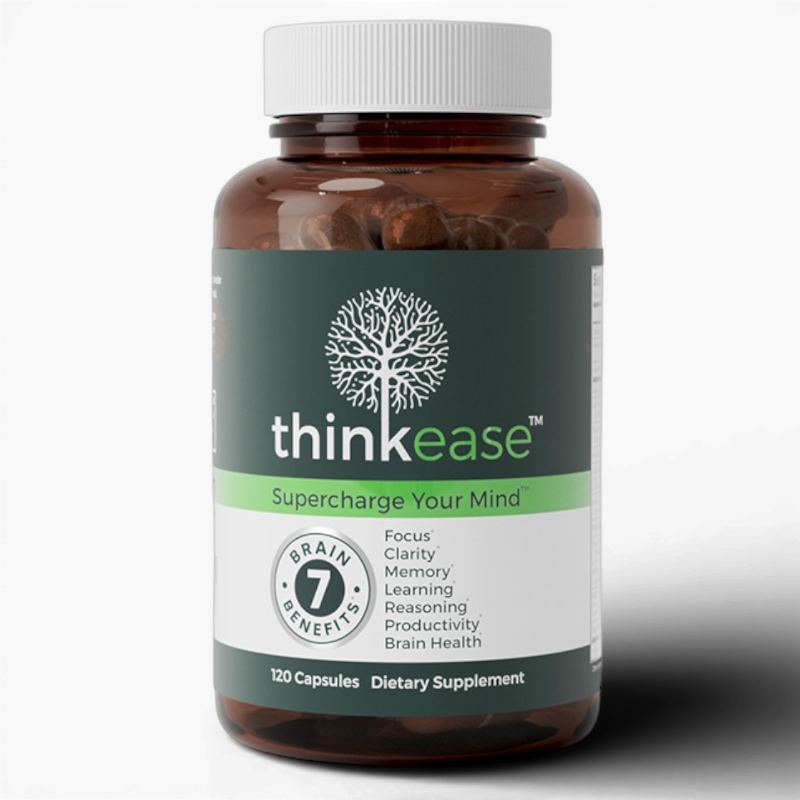
Highest rated nootropic
Why we recommend ThinkEase
- 300 mg of bacopa at 50% bacosides, about 150 mg of bacosides against roughly 60 mg in Nooceptin
- 100 mg of phosphatidylserine, which Nooceptin does not include, and more citicoline (250 mg against 200 mg)
- 30 mg of saffron, which Nooceptin does not include, plus the same 200 mg of L-theanine and more rhodiola (200 mg against 150 mg)
- About $1.50 a day on the five-month pack, with a 100-day money-back guarantee
Who should buy Nooceptin?
Nooceptin suits people who want a short, caffeine-free formula with ginseng and a concentrated lion's mane extract. If memory is your priority, ThinkEase's research-level bacopa and phosphatidylserine make it the stronger choice.
Frequently asked questions
Does Nooceptin work?
Several of its ingredients, including citicoline, L-theanine and Panax ginseng, are at or near research doses. Its bacopa is low, and the product itself has not been tested in a published trial.
What are the ingredients in Nooceptin?
Citicoline (200 mg), Panax ginseng (200 mg), L-theanine (200 mg), rhodiola (150 mg), bacopa (150 mg at 40% bacosides), lion's mane extract (400 mg) and ginkgo (100 mg).
Does Nooceptin contain caffeine?
No. Nooceptin is caffeine-free.
What is better than Nooceptin?
ThinkEase is our top-rated nootropic. It provides more than twice the bacosides, adds phosphatidylserine and saffron, and comes with a 100-day money-back guarantee.
Final verdict
Nooceptin is a well-made, transparent nootropic with several good doses. ThinkEase covers more of the evidence, especially for memory, at a lower daily cost on multi-packs, which is why it is our top pick.
Sources and further reading
- Nooceptin official site (nooceptin.com)
- ThinkEase official formula and Supplement Facts
- Calabrese et al. 2008, bacopa in adults over 65
- Darbinyan et al. 2000, rhodiola in night-shift physicians
- Docherty et al. 2023, lion's mane in young adults
- Giesbrecht et al. 2010, L-theanine and caffeine on task switching
- Haskell et al. 2008, L-theanine, caffeine and their combination
- Hidese et al. 2019, four weeks of L-theanine in healthy adults
- Jang et al. 2008, systematic review of red ginseng for erectile function
- Kongkeaw et al. 2014, meta-analysis of bacopa trials
- Lopresti et al. 2025, 12-week Bacumen bacopa trial
- McGlade et al. 2019, citicoline, attention and motor speed
- Mori et al. 2009, lion's mane in mild cognitive impairment
- Nakazaki et al. 2021, citicoline and memory in healthy older adults
- Olsson et al. 2009, rhodiola in stress-related fatigue
- Owen et al. 2008, L-theanine with caffeine on attention
- Reay et al. 2005, Panax ginseng and sustained mental activity
- Stough et al. 2001, 12 weeks of bacopa in healthy adults