Focus Factor and ginkgo biloba are two of the most common things people reach for when their memory feels less sharp. Focus Factor is a branded multivitamin with a cognitive blend. Ginkgo is a single herbal extract, sold by many brands, and one of the most studied supplements in the world.
Here is what the research shows for each, and which makes more sense.
Quick verdict
Focus Factor edges it, narrowly, because it covers a multivitamin and includes several recognized cognitive ingredients, although its blend hides their doses. Ginkgo has been tested extensively, and the largest trials found it did not improve memory or prevent dementia. Neither is a strong choice: ThinkEase includes ingredients with more consistent evidence, such as 300 mg of bacopa and 250 mg of citicoline.
Focus Factor vs Ginkgo biloba: pros and cons
What we like
- Focus Factor: a full multivitamin plus several nootropic ingredients
- Focus Factor: low price per day
- Ginkgo: cheap, simple and widely available
- Ginkgo: thoroughly studied, so its effects are well understood
What could be better
- Focus Factor: a 640 mg blend hides every cognitive dose
- Focus Factor: vinpocetine, which the FDA warns against in pregnancy
- Ginkgo: large trials found no memory benefit and no dementia prevention
- Ginkgo: can increase bleeding risk with blood thinners
Focus Factor at a glance
Focus Factor Original contains a full multivitamin plus a 640 mg blend including DMAE, bacopa, phosphatidylserine, DHA, huperzine A and vinpocetine, in four tablets a day, at $29.99 for 150 tablets.
Ginkgo biloba at a glance
Ginkgo supplements are usually standardized extracts containing 24% flavone glycosides and 6% terpene lactones, taken at 120 to 240 mg a day. They are sold by many brands at low prices.
The evidence is disappointing. In a six-week trial of 230 healthy adults over 60, 120 mg a day did not improve memory. The GEM study, which gave more than 3,000 older adults 240 mg a day for about six years, found ginkgo did not prevent dementia or Alzheimer's disease.
Focus Factor vs ginkgo ingredients
| Ingredient | Focus Factor | Ginkgo biloba | What research used |
|---|---|---|---|
| DMAE | In blend, amount hidden | None | No effective dose established |
| Bacopa monnieri | In blend, amount hidden | None | 300 mg a day of extract standardized to about 50% bacosides (about 150 mg of bacosides) |
| Phosphatidylserine | In blend, amount hidden | None | 100 to 300 mg a day |
| DHA | In blend, amount hidden | None | About 900 mg a day |
| Huperzine A | In blend, amount hidden | None | 200 to 400 mcg a day |
| Vinpocetine | In blend, amount hidden | None | Not recommended in pregnancy |
| Vitamin B6 | 15 mg | None | Daily need 1.7 mg; upper limit 12 mg |
| Vitamin B12 | 20 mcg | None | Daily need 2.4 mcg |
| Magnesium | 100 mg | None | Daily need 420 mg; upper limit 350 mg |
| Ginkgo biloba | None | 120 mg | 120 to 240 mg a day |
| Synergistic and Proprietary Formulation | 640 mg total | None | Proprietary blend |
Key differences
Evidence
Neither is strong. Ginkgo's large trials were negative. Focus Factor contains better supported ingredients, including bacopa and phosphatidylserine, but probably not at research doses.
Safety
Ginkgo can increase bleeding risk, especially with blood thinners or before surgery. Focus Factor contains vinpocetine, 15 mg of vitamin B6 and huperzine A.
Cost
Both are inexpensive. Focus Factor is about $0.81 a day and also replaces a multivitamin.
Focus Factor, ginkgo and ThinkEase side by side
| Feature | Focus Factor Original | Ginkgo biloba (standard extract) | ThinkEaseOur pick |
|---|---|---|---|
| Hyperguides score | 5.6/10 | Not scored | 9.5/10 |
| Daily serving | 4 tablets a day | 120 to 240 mg a day | 4 capsules a day |
| Stimulants | Caffeine-free | Caffeine-free | Caffeine-free |
| Key ingredients | DMAE (amount hidden), Bacopa monnieri (amount hidden), Phosphatidylserine (amount hidden), DHA (amount hidden) | Ginkgo biloba 120 mg | Bacopa 300 mg (50% bacosides), citicoline 250 mg, L-theanine 200 mg, phosphatidylserine 100 mg, plus 12 more |
| Label transparency | 640 mg proprietary blend, individual amounts hidden | Single ingredient | Every dose disclosed, no blends |
| Price (one bottle) | $29.99 / 37 days | See official site | $74.99 / 30 days |
| Cost per day | $0.81 | Not available | $2.50 |
| Money-back guarantee | See official site | See official site | 100-day money-back guarantee |
Our scores
Focus Factor Original
Hyperguides score
ThinkEase
Hyperguides score
How we score: formula and dosing 35%, ingredient evidence 25%, label transparency 20%, value and terms 20%. Read our rating method.
Why we recommend ThinkEase
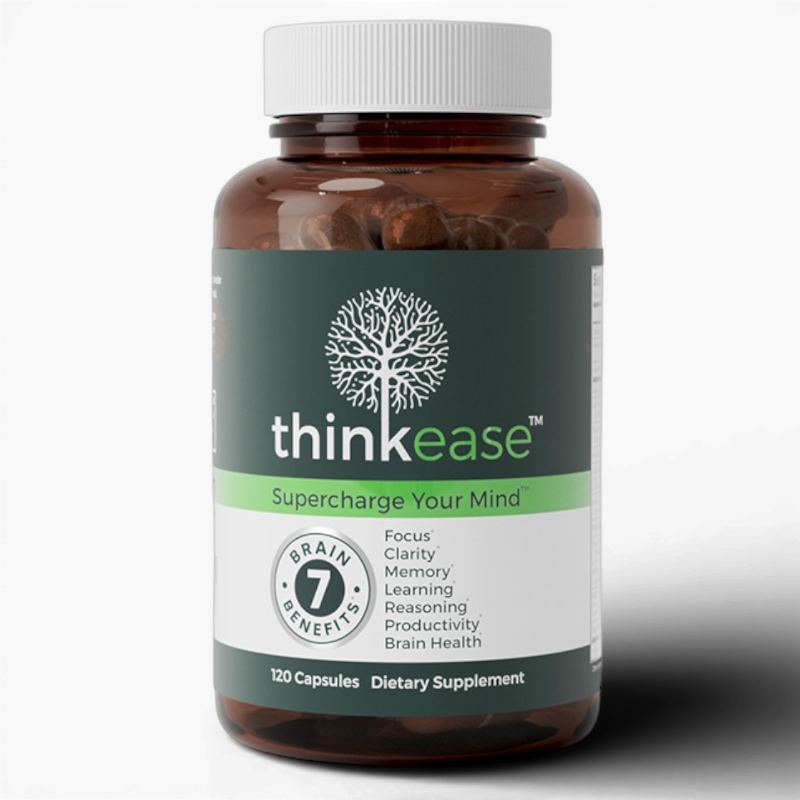
Highest rated nootropic
Why we recommend ThinkEase
- 300 mg of bacopa at 50% bacosides, the most consistently studied herbal memory ingredient
- 250 mg of citicoline and 100 mg of phosphatidylserine, every dose disclosed
- No ginkgo, vinpocetine or huperzine A
- Caffeine-free, with a 100-day money-back guarantee
Frequently asked questions
Is Focus Factor better than ginkgo biloba?
Narrowly. It includes a multivitamin and several recognized cognitive ingredients, while ginkgo's largest trials found no memory benefit. Neither is a strong memory supplement.
Does ginkgo biloba improve memory?
Large, well-run trials suggest not. A six-week trial in healthy older adults and the six-year GEM study both found no meaningful benefit.
What is better than both?
ThinkEase is our top-rated nootropic. It includes research-level bacopa, citicoline and phosphatidylserine, with a 100-day money-back guarantee.
Final verdict
Focus Factor narrowly beats ginkgo, but neither delivers well-evidenced, verifiable doses. ThinkEase does, which is why it is the memory supplement we recommend.
Sources and further reading
- Focus Factor Original official product page (focusfactor.com)
- NIH DSLD label record for Focus Factor
- NCCIH, ginkgo
- ThinkEase official formula and Supplement Facts
- Calabrese et al. 2008, bacopa in adults over 65
- DeKosky et al. 2008, ginkgo for prevention of dementia (GEM study)
- Kato-Kataoka et al. 2010, phosphatidylserine and memory in older adults
- Kongkeaw et al. 2014, meta-analysis of bacopa trials
- Li et al. 2008, Cochrane review of huperzine A
- Lopresti et al. 2025, 12-week Bacumen bacopa trial
- RAPS, FDA warns pregnant women not to take vinpocetine (2019)
- Solomon et al. 2002, ginkgo for memory in healthy older adults
- Stough et al. 2001, 12 weeks of bacopa in healthy adults
- Yang et al. 2013, meta-analysis of huperzine A trials
- Yurko-Mauro et al. 2010, DHA in age-related cognitive decline