ADHD is a common condition that affects attention, activity and impulse control in children and adults. The treatments with the strongest evidence are ADHD medication and behavioral approaches such as therapy, coaching and parent training. Many people also ask about supplements and nootropics, either alongside treatment or before seeking it.
This guide sets out what the research shows for the supplements most often used for ADHD, how they fit with treatment, and what we recommend for adults who want general focus support. If you think you or your child has ADHD, the first step is an assessment by a doctor.
Quick verdict
No supplement treats ADHD, and none matches the effect of ADHD medication. The evidence for omega-3, zinc and herbal products is limited or mixed, while melatonin may help with the sleep problems that often come with ADHD. For adults who want daily, caffeine-free focus support alongside their treatment plan, ThinkEase is our top-rated nootropic, with research doses of citicoline, L-theanine and rhodiola. Check with your prescriber before adding any supplement.
Supplements for ADHD pros and cons
What we like
- Omega-3 may help some children a little, with few side effects
- Melatonin can help with falling asleep, a common ADHD problem
- Zinc may help children who are low in it
- L-theanine and citicoline support attention in healthy adults
What could be better
- No supplement treats ADHD or matches medication
- Evidence for most supplements in ADHD is limited or mixed
- Some herbs, such as St John's wort, interact with medicines
- Nootropics are not suitable for children
What the evidence shows
- Omega-3 fatty acids: the evidence is inconclusive. A 2023 Cochrane review found low-certainty evidence of a possible medium-term improvement, but high-certainty evidence of no effect on total symptoms rated by parents, and omega-3s are less effective than stimulant medication.
- Melatonin: may help people with ADHD fall asleep sooner and sleep longer. In a 2019 review of children, those taking it fell asleep about 20 minutes sooner and slept about 33 minutes longer, but its effect on daytime behavior is unclear.
- Zinc: may modestly improve some symptoms when added to standard treatment, mainly in studies from regions where zinc deficiency is common. It is not known whether it helps people who are not deficient.
- Herbs: the evidence for ginkgo and pine bark extract is insufficient, and St John's wort was no better than placebo in a trial of 54 children.
- Caffeine: high doses may modestly improve symptoms, but lower doses were no better than placebo, and poor sleep is a common side effect.
Nootropics for adults with ADHD
There is little research on nootropics in adults with ADHD specifically. What we do know comes from studies in healthy adults: L-theanine with caffeine improves attention and task switching, citicoline improved attention in a 28-day trial, and rhodiola reduces mental fatigue. These can support everyday focus, but they are not a treatment for ADHD and should not replace medication or therapy.
If you take ADHD medication, check with your prescriber before adding a nootropic, especially one with caffeine, which can add to side effects such as a raised heart rate, anxiety and poor sleep.
Our pick for adults: ThinkEase
ThinkEase is caffeine-free, which matters if you already take a stimulant or are sensitive to caffeine. It provides 250 mg of citicoline, 200 mg of L-theanine, 200 mg of rhodiola and 275 mg of N-acetyl L-tyrosine for focus and mental fatigue, with bacopa and phosphatidylserine for memory, and every dose is on the label. It is for adults only. Read our ThinkEase review.
Lower-cost alternatives
Rootana Pure Mind has the same caffeine-free ingredients as ThinkEase at three quarters of the amount per serving, and MindVitality Focus combines rhodiola, ashwagandha and phosphatidylserine for stress and fatigue. Read our Pure Mind review and MindVitality review.
Supplements for children with ADHD
Our picks are not suitable for anyone under 18. If you are considering supplements for a child, talk to their doctor first: omega-3 and melatonin are the most studied, but doses for children need medical advice, and zinc can be harmful in excess.
Our three picks side by side
| Feature | ThinkEaseOur pick | Rootana Pure MindOur pick | MindVitality FocusOur pick |
|---|---|---|---|
| Hyperguides score | 9.5/10 | 9.1/10 | 8.6/10 |
| Daily serving | 4 capsules a day | 3 capsules a day (4 for a stronger dose) | 3 tablets a day with breakfast or lunch |
| Stimulants | Caffeine-free | Caffeine-free | Caffeine-free |
| Key ingredients | Bacopa 300 mg (50% bacosides), citicoline 250 mg, L-theanine 200 mg, phosphatidylserine 100 mg, plus 12 more | Bacopa 225 mg, citicoline 187.5 mg, L-theanine 150 mg, rhodiola 150 mg, plus 12 more | Lion's mane 500 mg, bacopa 300 mg, rhodiola 250 mg, ashwagandha 250 mg, plus 13 more |
| Label transparency | Every dose disclosed, no blends | Every dose disclosed, no blends | Every dose disclosed, no blends |
| Price (one bottle) | $74.99 / 30 days | $39.99 / 28 days | $59.99 / 30 days |
| Cost per day | $2.50 | $1.43 | $2.00 |
| Money-back guarantee | 100-day money-back guarantee | Unopened bottles can be returned within 30 days (US and Canada) | 100-day money-back guarantee |
Our scores
ThinkEase
Hyperguides score
Rootana Pure Mind
Hyperguides score
MindVitality Focus
Hyperguides score
How we score: formula and dosing 35%, ingredient evidence 25%, label transparency 20%, value and terms 20%. Read our rating method.
Why we recommend ThinkEase
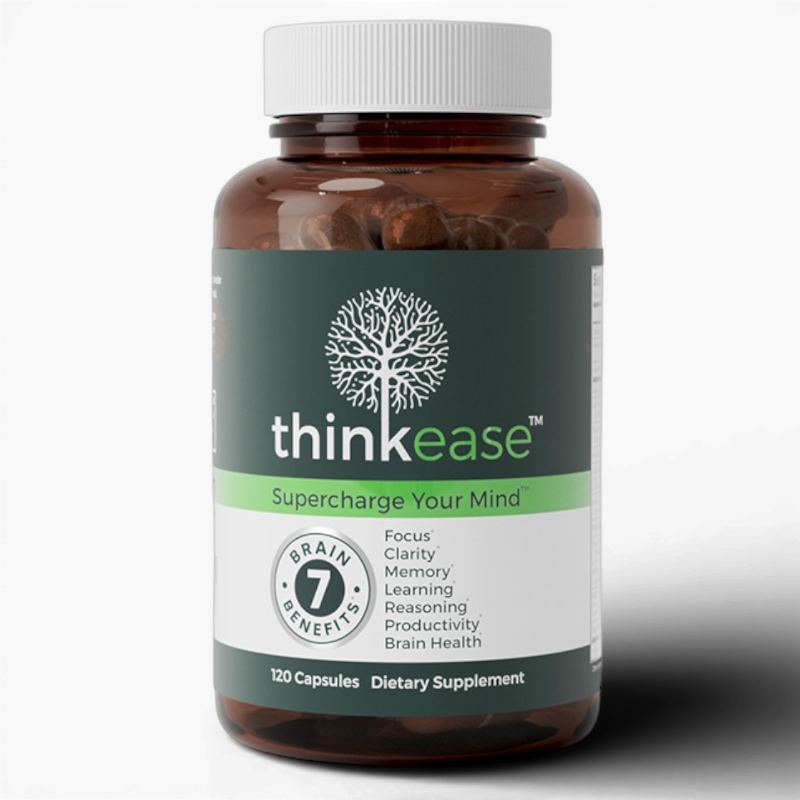
Highest rated nootropic
Why we recommend ThinkEase
- Caffeine-free, so it adds no caffeine to your day
- 250 mg of citicoline and 200 mg of L-theanine, studied for attention in healthy adults
- 200 mg of rhodiola for mental fatigue, plus bacopa and phosphatidylserine for memory
- Every dose on the label, with a 100-day money-back guarantee
Frequently asked questions
What is the best supplement for ADHD?
No supplement treats ADHD. Omega-3, zinc and melatonin are the most studied, with mixed or limited evidence. For adults who want general focus support alongside proper treatment, we rate ThinkEase highest.
What is the best nootropic for ADHD?
There is little research on nootropics in ADHD itself. For adults who want caffeine-free focus support, ThinkEase is our top-rated nootropic. Talk to your prescriber before adding it to ADHD medication.
Can supplements replace ADHD medication?
No. Medication and behavioral approaches have the strongest evidence. Do not stop or change prescribed medication without talking to your doctor.
Does omega-3 help ADHD?
The evidence is inconclusive. Reviews suggest at most a small benefit for some children, and omega-3s are less effective than stimulant medication.
Is L-theanine good for ADHD?
L-theanine with caffeine improves attention in healthy adults, but evidence in people with ADHD is limited.
Final verdict
Supplements cannot treat ADHD, and the strongest results come from medication and behavioral support. For adults who want daily, caffeine-free help with focus and mental fatigue alongside their treatment, ThinkEase is the nootropic we rate highest.
Sources and further reading
- ThinkEase official formula and Supplement Facts
- Rootana Pure Mind official product page and Supplement Facts
- MindVitality Focus official site and Supplement Facts
- Calabrese et al. 2008, bacopa in adults over 65
- Chandrasekhar et al. 2012, KSM-66 ashwagandha, stress and cortisol
- Darbinyan et al. 2000, rhodiola in night-shift physicians
- Docherty et al. 2023, lion's mane in young adults
- Giesbrecht et al. 2010, L-theanine and caffeine on task switching
- Haskell et al. 2008, L-theanine, caffeine and their combination
- Hidese et al. 2019, four weeks of L-theanine in healthy adults
- Jang et al. 2008, systematic review of red ginseng for erectile function
- Jongkees et al. 2015, review of tyrosine under stress
- Kato-Kataoka et al. 2010, phosphatidylserine and memory in older adults
- Kell et al. 2017, affron saffron extract and mood
- Kongkeaw et al. 2014, meta-analysis of bacopa trials
- Lopresti et al. 2019, ashwagandha in ageing overweight men
- Lopresti et al. 2025, 12-week Bacumen bacopa trial
- McGlade et al. 2019, citicoline, attention and motor speed
- Montgomery et al. 2003, meta-analysis of acetyl-L-carnitine trials
- Mori et al. 2009, lion's mane in mild cognitive impairment
- NCCIH, ADHD and complementary health approaches: what the science says
- NCCIH, St. John's wort and drug interactions
- NIH Office of Dietary Supplements, ashwagandha fact sheet
- Nakazaki et al. 2021, citicoline and memory in healthy older adults
- Olsson et al. 2009, rhodiola in stress-related fatigue
- Owen et al. 2008, L-theanine with caffeine on attention
- Reay et al. 2005, Panax ginseng and sustained mental activity
- Stough et al. 2001, 12 weeks of bacopa in healthy adults
- Wankhede et al. 2015, ashwagandha and strength training in men