Prevagen and RediMind are both sold to adults who want a sharper memory, and both rely heavily on advertising. Prevagen is built on a single jellyfish-derived protein, while RediMind combines five better known nootropic ingredients: huperzine A, ginkgo, lion's mane, alpha-GPC and bacopa.
We compared their formulas, the evidence and claims behind each, the side effects and the cost. We also looked at whether RediMind's headline claim of a 51% memory improvement stands up.
Quick verdict
RediMind is the better of the two, because its ingredients have at least some independent research behind them, whereas Prevagen's apoaequorin does not, and Prevagen's memory claims were successfully challenged by the FTC. But RediMind does not disclose how much of each ingredient it contains, and its 51% claim comes from an unpublished consumer study. ThinkEase beats both, with every dose on the label and research-level bacopa and citicoline.
Prevagen vs RediMind: pros and cons
What we like
- RediMind: five recognized nootropic ingredients, including bacopa and alpha-GPC
- RediMind: caffeine-free, vegan, with a 30-day money-back guarantee
- Prevagen: one capsule a day with 2,000 IU of vitamin D
- Both cost about $40 for a month at their lowest strength
What could be better
- RediMind: no individual ingredient amounts on its label
- RediMind: the 51% claim rests on an unpublished 56-person study
- Prevagen: weak independent evidence and an FTC court loss over its claims
- Prevagen: stronger versions cost $59.95 or more
Prevagen at a glance
Prevagen Regular Strength contains 10 mg of apoaequorin, a protein first found in jellyfish and now made by fermentation, plus 2,000 IU of vitamin D. Extra Strength (20 mg) and Professional (40 mg) versions cost more.
The maker's Madison Memory Study did not find a statistically significant benefit across its whole study group, and its advertising relied on subgroup results. The FTC and the New York Attorney General sued over those claims, and in December 2024 the FTC announced a court win against the challenged claims, which the company has appealed. Because apoaequorin is a protein, it is expected to be digested in the gut like other dietary proteins.
RediMind at a glance
RediMind, from Nutreance, combines huperzine A, ginkgo, lion's mane, alpha-GPC and bacopa in a vegan capsule. The directions suggest one or two capsules a day, or two to four as needed, up to six. A 30-capsule bottle costs $39.95 and comes with a 30-day money-back guarantee.
RediMind's main selling point is a claimed 51% improvement in memory in 30 days. According to the brand, that figure comes from a 56-person study by a consumer research company using a shopping-list memory test, in which average scores rose from 9.8 to 14.8 words out of 20. The study has not been published in a peer-reviewed journal, and the product's label does not show how much of each ingredient you get, so the result is hard to judge.
Prevagen vs RediMind ingredients
| Ingredient | Prevagen | RediMind | What research used |
|---|---|---|---|
| Apoaequorin | 10 mg | None | No independent dose data |
| Vitamin D3 | 50 mcg | None | Daily need 15 mcg; upper limit 100 mcg |
| Alpha-GPC | None | In blend, amount hidden | 300 to 600 mg a day in supplements (1,200 mg in dementia trials) |
| Huperzine A | None | In blend, amount hidden | 200 to 400 mcg a day |
| Bacopa monnieri | None | In blend, amount hidden | 300 mg a day of extract standardized to about 50% bacosides (about 150 mg of bacosides) |
| Lion's mane | None | In blend, amount hidden | 1 to 3 g a day of mushroom |
| Ginkgo biloba | None | In blend, amount hidden | 120 to 240 mg a day |
| RediMind formula: huperzine A, ginkgo, lion's mane, alpha-GPC and bacopa | None | Total not stated | Proprietary blend |
Key differences
Evidence
RediMind wins. Bacopa has the most consistent evidence of any herbal nootropic for memory, alpha-GPC raises choline levels, and huperzine A has modest evidence in older adults. Without disclosed amounts, though, we cannot tell whether RediMind reaches the doses used in research. Prevagen's evidence comes almost entirely from company research whose main result was not significant.
Side effects
Prevagen has few reported side effects. RediMind's huperzine A can cause nausea, sweating and a slower heart rate and should not be combined with prescription dementia medicines, and its ginkgo can increase bleeding risk with blood thinners. Some users report trouble sleeping or palpitations, so take it in the morning and check with your doctor if you have a heart condition.
Price
Both cost about $40 for 30 capsules. If you take two RediMind capsules a day, as many users do, a bottle lasts 15 days and the monthly cost doubles. Prevagen's stronger versions cost $59.95 or more a month.
Prevagen, RediMind and ThinkEase side by side
| Feature | Prevagen Regular Strength | RediMind | ThinkEaseOur pick |
|---|---|---|---|
| Hyperguides score | 3.8/10 | 5.4/10 | 9.5/10 |
| Daily serving | 1 capsule a day | 1 to 2 capsules a day (up to 6) | 4 capsules a day |
| Stimulants | Caffeine-free | Caffeine-free | Caffeine-free |
| Key ingredients | Apoaequorin 10 mg, Vitamin D3 50 mcg | Alpha-GPC (amount hidden), Huperzine A (amount hidden), Bacopa monnieri (amount hidden), Lion's mane (amount hidden) | Bacopa 300 mg (50% bacosides), citicoline 250 mg, L-theanine 200 mg, phosphatidylserine 100 mg, plus 12 more |
| Label transparency | Every dose disclosed | Five ingredients, individual amounts not disclosed | Every dose disclosed, no blends |
| Price (one bottle) | $39.95 / 30 days | $39.95 / 30 days | $74.99 / 30 days |
| Cost per day | $1.33 | $1.33 | $2.50 |
| Money-back guarantee | See official site | 30-day money-back guarantee | 100-day money-back guarantee |
Our scores
Prevagen Regular Strength
Hyperguides score
RediMind
Hyperguides score
ThinkEase
Hyperguides score
How we score: formula and dosing 35%, ingredient evidence 25%, label transparency 20%, value and terms 20%. Read our rating method.
Why we recommend ThinkEase
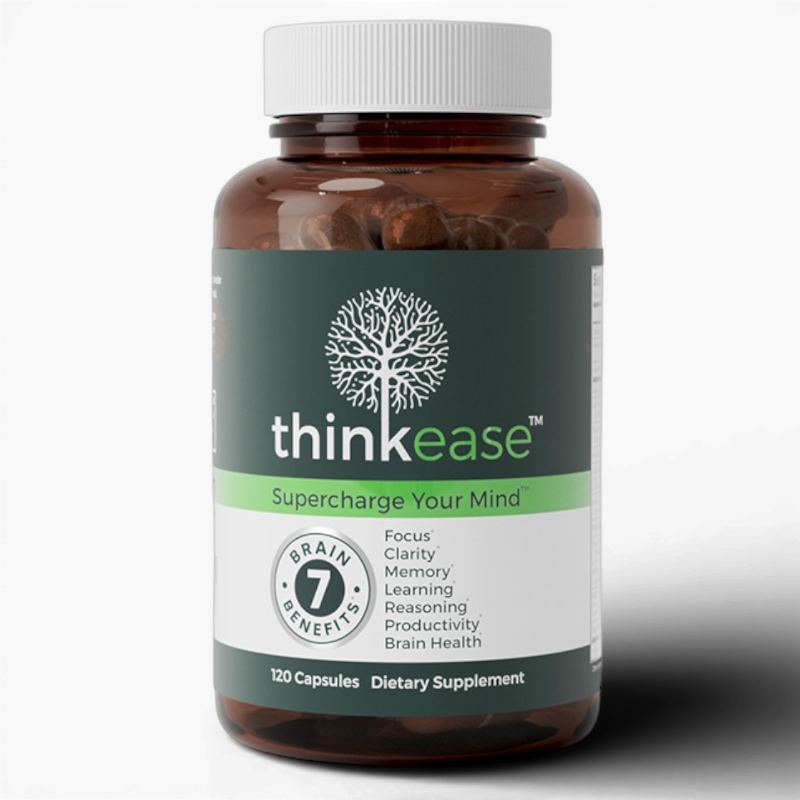
Highest rated nootropic
Why we recommend ThinkEase
- Every dose on the label, so you can check it against the research, unlike RediMind's undisclosed formula
- 300 mg of bacopa at 50% bacosides and 250 mg of citicoline, the memory ingredients with the most consistent evidence
- No huperzine A, so there are no cholinergic side effects or dementia-drug interactions to worry about
- Caffeine-free, with a 100-day money-back guarantee, more than three times RediMind's 30 days
Frequently asked questions
Is RediMind better than Prevagen?
In our view, yes. Its ingredients have more independent research than Prevagen's apoaequorin. But RediMind hides its individual doses, so we rate it well below fully disclosed formulas such as ThinkEase.
What are the side effects of RediMind?
Possible side effects include nausea, headache, trouble sleeping and palpitations. Huperzine A can slow the heart rate and should not be combined with dementia medicines, and ginkgo can increase bleeding risk with blood thinners.
Is RediMind a con?
RediMind is a real product with recognized ingredients and a 30-day money-back guarantee. Its weaknesses are an undisclosed formula and a headline claim based on an unpublished consumer study, so treat the 51% figure with caution.
Does Prevagen really work?
The evidence is weak. The maker's own main study did not show a significant benefit across the full group, and the FTC won its case over Prevagen's memory claims in December 2024, a decision the company is appealing.
What is the best alternative to Prevagen and RediMind?
ThinkEase is our top-rated nootropic. It discloses all 16 ingredient amounts, includes 300 mg of bacopa, 250 mg of citicoline and 200 mg of L-theanine, is caffeine-free and has a 100-day money-back guarantee.
Final verdict
Between these two, RediMind is the better bet on ingredients, while Prevagen trails on evidence. Neither tells you enough to be confident you are getting research-level doses. For a memory supplement where every amount is visible and backed by research, ThinkEase is the one we recommend.
Sources and further reading
- Prevagen Regular Strength official product page (prevagen.com)
- US FTC statement on the Prevagen lawsuit
- RediMind official product page (nutreance.com)
- RediMind Supplement Facts page (nutreance.com)
- ThinkEase official formula and Supplement Facts
- Calabrese et al. 2008, bacopa in adults over 65
- De Jesus Moreno 2003, alpha-GPC in Alzheimer's dementia
- DeKosky et al. 2008, ginkgo for prevention of dementia (GEM study)
- Docherty et al. 2023, lion's mane in young adults
- Kongkeaw et al. 2014, meta-analysis of bacopa trials
- Lerchbaum et al. 2017, vitamin D and testosterone in healthy men
- Li et al. 2008, Cochrane review of huperzine A
- Lopresti et al. 2025, 12-week Bacumen bacopa trial
- Mori et al. 2009, lion's mane in mild cognitive impairment
- NCCIH, ginkgo
- NIH Office of Dietary Supplements, choline fact sheet
- NIH Office of Dietary Supplements, vitamin D fact sheet
- Pilz et al. 2011, vitamin D supplementation and testosterone in men
- Solomon et al. 2002, ginkgo for memory in healthy older adults
- Stough et al. 2001, 12 weeks of bacopa in healthy adults
- Yang et al. 2013, meta-analysis of huperzine A trials