MindVitality Focus is a caffeine-free daily nootropic tablet from Health Nutrition, the company behind ThinkEase and Testogen. Its three-tablet serving combines 12 nootropic ingredients, including rhodiola, ashwagandha, bacopa, lion's mane and phosphatidylserine, with five B vitamins, and every dose is printed on the label.
It is our great value pick among nootropics. This review checks each dose against the research, explains where it is strong and where it is light, and compares it with the alternatives.
Quick verdict
MindVitality Focus is a solid, fully disclosed nootropic at a fair price. Its 250 mg of rhodiola and 100 mg of phosphatidylserine are at research doses, and its 250 mg of ashwagandha is close, which makes it a good fit for stress and mental fatigue. It has fewer of the best-researched focus ingredients than ThinkEase, with no citicoline, L-theanine or saffron, and its bacopa is a 20% bacoside extract, so it delivers less than the trials used. At $35.99 a bottle on the five-month pack, with a 100-day money-back guarantee, it is our great value pick. You can learn more at mindvitality.co.
MindVitality pros and cons
What we like about MindVitality
- 17 ingredients and vitamins, every dose on the label
- Rhodiola (250 mg) and phosphatidylserine (100 mg) at research doses
- Caffeine-free, three tablets a day
- From $35.99 a bottle on the five-month pack, with a 100-day money-back guarantee
Where MindVitality falls short
- No citicoline, L-theanine or saffron
- Bacopa is standardized to 20% bacosides, below the 50% extracts used in the main trials
- Ginkgo (50 mg) and huperzine A (about 2 mcg) are well below studied amounts
- Choline bitartrate and mucuna have little evidence for focus
MindVitality at a glance
| Made by | Health Nutrition |
|---|---|
| Daily serving | 3 tablets a day with breakfast or lunch |
| Stimulants | Caffeine-free |
| Key ingredients | Lion's mane 500 mg, bacopa 300 mg, rhodiola 250 mg, ashwagandha 250 mg, plus 13 more |
| Label | Every dose disclosed, no blends |
| Price | $59.99 for 30 days ($35.99 a bottle on the five-month pack) |
| Cost per day | $2.00 |
| Guarantee | 100-day money-back guarantee |
| Hyperguides score | 8.6/10 |
What is MindVitality Focus?
MindVitality Focus is sold by Health Nutrition. Each three-tablet serving contains lion's mane (500 mg), bacopa (300 mg at 20% bacosides), rhodiola (250 mg), ashwagandha (250 mg at 1.5% withanolides), N-acetyl L-tyrosine (250 mg), choline bitartrate (250 mg), phosphatidylserine (100 mg), Korean ginseng (100 mg at 8% ginsenosides), pine bark extract (75 mg), mucuna (75 mg), ginkgo (50 mg), Huperzia serrata extract (0.2 mg at 1% huperzine A) and vitamins B1, B3, B6, folic acid and B12.
Take three tablets with breakfast or lunch. The maker suggests starting with two tablets for the first three days.
MindVitality ingredients and doses
We grade MindVitality on the same scale as every other product. The table compares each dose with the research.
| Ingredient | Per daily serving | What research used | Our read |
|---|---|---|---|
| Lion's mane | 500 mg | 1 to 3 g a day of mushroom | Moderate dose |
| Bacopa monnieri (20% bacosides) | 300 mg | 300 mg a day of extract standardized to about 50% bacosides (about 150 mg of bacosides) | Low dose |
| Rhodiola rosea (3% rosavins, 1% salidroside) | 250 mg | 170 to 600 mg a day of standardized extract | Research dose |
| Ashwagandha (root extract, 1.5% withanolides) | 250 mg | 300 to 600 mg a day of a standardized root extract such as KSM-66 | Moderate dose |
| N-acetyl L-tyrosine | 250 mg | About 2 g of tyrosine under stress | Low dose |
| Choline bitartrate (as choline bitartrate) | 250 mg | No cognitive dose established | Limited evidence |
| Phosphatidylserine | 100 mg | 100 to 300 mg a day | Research dose |
| Panax ginseng (Korean ginseng, 8% ginsenosides) | 100 mg | About 200 to 400 mg a day of a standardized extract | Moderate dose |
| Pine bark extract (95% proanthocyanidins) | 75 mg | 100 to 150 mg a day | Moderate dose |
| Mucuna pruriens (seed extract) | 75 mg | No cognitive dose established | Limited evidence |
| Ginkgo biloba (24% flavone glycosides) | 50 mg | 120 to 240 mg a day | Low dose |
| Huperzine A (from 0.2 mg of Huperzia serrata extract at 1%) | 2 mcg | 200 to 400 mcg a day | Low dose |
| Vitamin B1 (thiamine) | 100 mg | Daily need 1.2 mg | 8,333% of daily need |
| Niacin (vitamin B3) | 12.5 mg | Daily need 16 mg; upper limit 35 mg | 78% of daily need |
| Vitamin B6 | 5 mg | Daily need 1.7 mg; upper limit 12 mg | 294% of daily need |
| Folate (as 100 mcg folic acid) | 170 mcg DFE | Daily need 400 mcg DFE | 42% of daily need |
Bacopa monnieri (300 mg)
The research dose is 300 mg a day of an extract with roughly 40 to 55% bacosides, taken for at least 12 weeks. At that level, trials show modest gains in memory and processing speed, though not every study finds an effect. Taking it with food reduces the mild stomach upset some people notice.
MindVitality provides 300 mg of bacopa extract, but at a lower standardization than the extracts used in the main trials. Standardized to 20% bacosides, it delivers about 60 mg of bacosides against roughly 150 mg in the main trials.
Rhodiola rosea (250 mg)
Rhodiola is one of the better supported adaptogens for fatigue. Studies have used 170 to 600 mg a day of standardized extract, with effects on mental fatigue appearing within two to four weeks.
At 250 mg, MindVitality matches the 170 to 600 mg a day of standardized extract used in research.
Ashwagandha (250 mg)
Ashwagandha is one of the best-studied herbs for stress. In a 60-day trial of stressed adults, 600 mg a day of a root extract lowered stress scores and cut cortisol by about 28% compared with placebo, and other trials have reported similar effects on stress.
MindVitality provides 250 mg, roughly 83% of the low end of the 300 to 600 mg a day of a standardized root extract such as KSM-66 used in research, so the effect may be smaller. Rare liver injury has been reported; avoid in pregnancy and check with a doctor if you take thyroid or sedative medication.
Phosphatidylserine (100 mg)
Phosphatidylserine has been studied at 100 to 300 mg a day, mainly in older adults with memory complaints, where it produced modest improvements over several months.
MindVitality's 100 mg sits within the 100 to 300 mg a day used in the trials.
Lion's mane (500 mg)
In people, the best-known lion's mane trial gave adults aged 50 to 80 with mild cognitive impairment 3 g a day for 16 weeks and found improved cognitive scores that faded after they stopped. A 2023 study in young adults using 1.8 g a day found quicker performance on one test after a single dose but no broad improvement after four weeks.
MindVitality provides 500 mg, roughly 50% of the low end of the 1 to 3 g a day of mushroom used in research, so the effect may be smaller.
Panax ginseng (100 mg)
Panax ginseng has been studied for mental performance and fatigue. In small trials, around 200 mg of a standardized extract improved performance on demanding mental tasks and reduced mental fatigue, although results across studies are mixed.
MindVitality includes 100 mg. That is a reasonable amount, though below the about 200 to 400 mg a day of a standardized extract that most trials used.
Where MindVitality is strongest
Stress and mental fatigue are MindVitality's strongest areas. Its 250 mg of rhodiola is within the 170 to 600 mg range that reduced mental fatigue in trials, and its 250 mg of ashwagandha is close to the 300 to 600 mg of standardized root extract used in stress studies. Phosphatidylserine at 100 mg matches the dose that improved memory in older adults with memory complaints over six months.
Lion's mane (500 mg) and Korean ginseng (100 mg) add support at about half of their studied amounts, and pine bark extract (75 mg) is three quarters of the lower research dose.
Where the doses are lighter
Bacopa is the most researched herb for memory, but the main trials used extracts standardized to about 50% bacosides. MindVitality's 300 mg at 20% delivers about 60 mg of bacosides, against roughly 150 mg in those studies. Its ginkgo (50 mg) is well under the 120 to 240 mg tested, its huperzine A is a trace amount, and choline bitartrate and mucuna have little evidence for focus at any dose.
It also lacks three of the ingredients we rate most highly for focus and mood: citicoline, L-theanine and saffron. That is the main reason it scores below ThinkEase and Rootana Pure Mind.
What results to expect
Rhodiola's fatigue trials ran for two to four weeks, and ashwagandha's stress trials for about two months, so give MindVitality at least eight weeks of daily use. Most of its benefits are gradual: steadier energy and resilience under pressure rather than a noticeable lift on the first day. The 100-day guarantee covers that period.
MindVitality side effects
MindVitality is caffeine-free and suits most people. Bacopa can upset the stomach, so take it with food, and rhodiola can feel mildly stimulating, so take it before the afternoon. Ashwagandha should be avoided in pregnancy, and ginkgo can increase bleeding risk alongside blood thinners. Check with your doctor first if you take regular medication, particularly for thyroid problems, mood, sleep or blood clotting.
MindVitality price and guarantee
One bottle of 90 tablets costs $59.99 and lasts 30 days, about $2.00 a day. The three-month pack costs $119.98 ($39.99 a bottle) and the five-month pack $179.97 ($35.99 a bottle, about $1.20 a day). Every order is covered by a 100-day money-back guarantee.
MindVitality vs ThinkEase and Pure Mind
All three are caffeine-free and fully disclosed. ThinkEase is our top-rated nootropic, with research doses of bacopa, citicoline, L-theanine, rhodiola, phosphatidylserine and saffron. Rootana Pure Mind has the same ingredients as ThinkEase at three quarters of the amount, for less money. MindVitality is the different option: it swaps citicoline, L-theanine and saffron for ashwagandha, ginseng and a higher dose of rhodiola, which suits people whose main problem is stress and fatigue.
See our ThinkEase review and Pure Mind review.
MindVitality vs ThinkEase, Pure Mind and NooCube
| Feature | MindVitality FocusOur pick | ThinkEaseOur pick | Rootana Pure MindOur pick | NooCube Brain Productivity |
|---|---|---|---|---|
| Hyperguides score | 8.6/10 | 9.5/10 | 9.1/10 | 7.5/10 |
| Daily serving | 3 tablets a day with breakfast or lunch | 4 capsules a day | 3 capsules a day (4 for a stronger dose) | 2 capsules a day |
| Stimulants | Caffeine-free | Caffeine-free | Caffeine-free | Caffeine-free |
| Key ingredients | Lion's mane 500 mg, bacopa 300 mg, rhodiola 250 mg, ashwagandha 250 mg, plus 13 more | Bacopa 300 mg (50% bacosides), citicoline 250 mg, L-theanine 200 mg, phosphatidylserine 100 mg, plus 12 more | Bacopa 225 mg, citicoline 187.5 mg, L-theanine 150 mg, rhodiola 150 mg, plus 12 more | Bacopa monnieri 250 mg, L-tyrosine 250 mg, Choline (VitaCholine) 250 mg, L-theanine 100 mg |
| Label transparency | Every dose disclosed, no blends | Every dose disclosed, no blends | Every dose disclosed, no blends | Mostly disclosed |
| Price (one bottle) | $59.99 / 30 days | $74.99 / 30 days | $39.99 / 28 days | $64.99 / 30 days |
| Cost per day | $2.00 | $2.50 | $1.43 | $1.08 |
| Money-back guarantee | 100-day money-back guarantee | 100-day money-back guarantee | Unopened bottles can be returned within 30 days (US and Canada) | 60-day money-back guarantee |
Our scores
MindVitality Focus
Hyperguides score
ThinkEase
Hyperguides score
Rootana Pure Mind
Hyperguides score
NooCube Brain Productivity
Hyperguides score
How we score: formula and dosing 35%, ingredient evidence 25%, label transparency 20%, value and terms 20%. Read our rating method.
Why we recommend MindVitality Focus
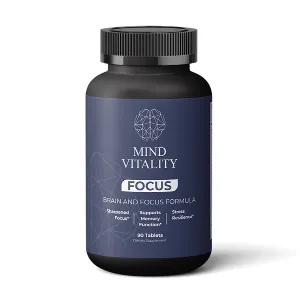
Highest rated nootropic for value
Why we recommend MindVitality Focus
- 250 mg of rhodiola and 100 mg of phosphatidylserine at research doses
- 250 mg of ashwagandha for stress, plus lion's mane, bacopa and Korean ginseng
- Caffeine-free, with every dose on the label
- From $35.99 a bottle on the five-month pack, with a 100-day money-back guarantee
Frequently asked questions
Does MindVitality work?
Its rhodiola and phosphatidylserine are at doses that worked in human trials, and its ashwagandha is close to the amounts studied for stress. Its bacopa is a lower-strength extract, and it has no citicoline or L-theanine, so expect gradual support for energy and stress rather than a strong focus effect.
What are the ingredients in MindVitality?
Lion's mane, bacopa, rhodiola, ashwagandha, N-acetyl L-tyrosine, choline bitartrate, phosphatidylserine, Korean ginseng, pine bark extract, mucuna, ginkgo and Huperzia serrata, with vitamins B1, B3, B6, folic acid and B12.
Does MindVitality contain caffeine?
No. MindVitality Focus is caffeine-free.
How many MindVitality tablets should I take?
Three tablets a day with breakfast or lunch. The maker suggests two a day for the first three days.
Is MindVitality better than ThinkEase?
No. We rate ThinkEase higher because it includes citicoline, L-theanine and saffron, and its bacopa is a stronger extract. MindVitality costs less and suits people who mainly want support with stress and fatigue.
Final verdict
MindVitality Focus does not have every ingredient we look for, but it gets several important ones right, discloses every dose and costs less than most premium nootropics. For a caffeine-free daily formula aimed at stress and mental fatigue, it is our great value pick.
Sources and further reading
- MindVitality Focus official site and Supplement Facts
- ThinkEase official formula and Supplement Facts
- Rootana Pure Mind official product page and Supplement Facts
- NooCube official site (noocube.com)
- Calabrese et al. 2008, bacopa in adults over 65
- Chandrasekhar et al. 2012, KSM-66 ashwagandha, stress and cortisol
- Darbinyan et al. 2000, rhodiola in night-shift physicians
- Docherty et al. 2023, lion's mane in young adults
- Giesbrecht et al. 2010, L-theanine and caffeine on task switching
- Hammond et al. 2017, lutein and zeaxanthin in older adults
- Haskell et al. 2008, L-theanine, caffeine and their combination
- Hidese et al. 2019, four weeks of L-theanine in healthy adults
- Jang et al. 2008, systematic review of red ginseng for erectile function
- Jongkees et al. 2015, review of tyrosine under stress
- Kato-Kataoka et al. 2010, phosphatidylserine and memory in older adults
- Kell et al. 2017, affron saffron extract and mood
- Kongkeaw et al. 2014, meta-analysis of bacopa trials
- Lopresti et al. 2019, ashwagandha in ageing overweight men
- Lopresti et al. 2025, 12-week Bacumen bacopa trial
- McGlade et al. 2019, citicoline, attention and motor speed
- Montgomery et al. 2003, meta-analysis of acetyl-L-carnitine trials
- Mori et al. 2009, lion's mane in mild cognitive impairment
- NIH Office of Dietary Supplements, ashwagandha fact sheet
- NIH Office of Dietary Supplements, choline fact sheet
- Nakazaki et al. 2021, citicoline and memory in healthy older adults
- Olsson et al. 2009, rhodiola in stress-related fatigue
- Owen et al. 2008, L-theanine with caffeine on attention
- Reay et al. 2005, Panax ginseng and sustained mental activity
- Renzi-Hammond et al. 2017, lutein and zeaxanthin in young adults
- Stough et al. 2001, 12 weeks of bacopa in healthy adults
- Wankhede et al. 2015, ashwagandha and strength training in men