Students want three things from a nootropic: better focus during long study sessions, better memory for what they learn, and steady energy through exam season. A few ingredients can help with each, but none of them replaces sleep and good study habits.
This guide covers the ingredients with real evidence, how to use them around studying and exams, and the products we rate highest. Our picks are for adults: nootropics are not suitable for anyone under 18.
Quick verdict
ThinkEase is our top pick for studying. It is caffeine-free, so you can take it every day and add your own coffee for long sessions, and it combines citicoline and L-theanine for focus with bacopa and phosphatidylserine for memory. Rootana Pure Mind is the budget choice, and Neuro gum is useful when you want a quick, measured caffeine dose before an exam.
Nootropics for studying pros and cons
What we like
- Caffeine with L-theanine reliably improves attention for a few hours
- Citicoline supports attention at 250 to 500 mg a day
- Bacopa has twelve-week trials showing better learning and memory
- A caffeine-free daily nootropic leaves you in control of your caffeine
What could be better
- Bacopa needs eight to twelve weeks, so start well before exams
- Too much caffeine harms sleep, and poor sleep harms memory
- No supplement replaces sleep, practice and revision
- Not suitable for anyone under 18
What helps with studying
The biggest gains come from how you study and how you sleep. Testing yourself, spacing study sessions out and getting enough sleep, especially before an exam, all have strong evidence for learning and memory. Nootropics can add a little on top: sharper focus during a session, less mental fatigue and, over a few months, better memory.
The ingredients with the best evidence
- Caffeine with L-theanine: taken together, about 40 to 150 mg of caffeine with 100 to 250 mg of L-theanine improved attention and task switching in several trials, with fewer jitters than caffeine alone.
- Citicoline: 250 to 500 mg a day for 28 days improved attention and motor speed in a trial of adolescent males.
- Bacopa: 300 mg a day of an extract standardized to about 50% bacosides for twelve weeks improved learning and memory in healthy adults.
- Pine bark extract: students taking 100 mg a day for eight weeks improved on cognitive tests and attention.
- Rhodiola: reduces mental fatigue, which helps during long study periods.
How to use nootropics around studying
Take a caffeine-free daily nootropic such as ThinkEase every day, starting at least two to three months before exams so the bacopa has time to work. On study days, add caffeine for focus: a coffee or a piece of caffeine gum about 30 to 60 minutes before you start, keeping your total under 400 mg a day and stopping at least eight hours before bed. On the night before an exam, prioritize sleep over a late session.
1. ThinkEase: best overall for studying
ThinkEase scores 9.5 out of 10. It provides 250 mg of citicoline and 200 mg of L-theanine for focus, 300 mg of bacopa and 100 mg of phosphatidylserine for memory, and 200 mg of rhodiola for mental fatigue, all caffeine-free. It costs $74.99 a month, or $44.99 a bottle on the five-month pack, with a 100-day money-back guarantee. Read our ThinkEase review.
2. Rootana Pure Mind: best on a student budget
Pure Mind has the same ingredients as ThinkEase at three quarters of the amount per serving, for $39.99 a bottle or $29.99 on the 3 + 1 free pack, about $1.07 a day. Read our Pure Mind review.
3. MindVitality Focus: for exam stress
MindVitality Focus combines 250 mg of rhodiola and 250 mg of ashwagandha with phosphatidylserine and bacopa, which suits students who feel the stress of exam season. It has no citicoline or L-theanine. It costs $59.99 a month, or $35.99 a bottle on the five-month pack. Read our MindVitality review.
4. Neuro gum: best for a quick, measured caffeine dose
Each piece of Neuro Energy & Focus gum provides 40 mg of caffeine and 60 mg of L-theanine, absorbed quickly through the mouth, so you can take a measured dose before a study session or exam. Read our Neuro gum review.
Can nootropics help with creativity?
Creativity is much harder to measure than attention or memory, and there is little good evidence that any supplement improves it. Caffeine and L-theanine help with focus, which matters when you are refining ideas, while rest, sleep and time away from a problem are often what help new ideas come.
Our four picks side by side
| Feature | ThinkEaseOur pick | Rootana Pure MindOur pick | MindVitality FocusOur pick | Neuro Energy & Focus Gum |
|---|---|---|---|---|
| Hyperguides score | 9.5/10 | 9.1/10 | 8.6/10 | 7.4/10 |
| Daily serving | 4 capsules a day | 3 capsules a day (4 for a stronger dose) | 3 tablets a day with breakfast or lunch | 1 to 2 pieces as needed |
| Stimulants | Caffeine-free | Caffeine-free | Caffeine-free | 40 mg caffeine per piece |
| Key ingredients | Bacopa 300 mg (50% bacosides), citicoline 250 mg, L-theanine 200 mg, phosphatidylserine 100 mg, plus 12 more | Bacopa 225 mg, citicoline 187.5 mg, L-theanine 150 mg, rhodiola 150 mg, plus 12 more | Lion's mane 500 mg, bacopa 300 mg, rhodiola 250 mg, ashwagandha 250 mg, plus 13 more | Caffeine 40 mg, L-theanine 60 mg |
| Label transparency | Every dose disclosed, no blends | Every dose disclosed, no blends | Every dose disclosed, no blends | Every dose disclosed |
| Price (one bottle) | $74.99 / 30 days | $39.99 / 28 days | $59.99 / 30 days | See official site |
| Cost per day | $2.50 | $1.43 | $2.00 | Not available |
| Money-back guarantee | 100-day money-back guarantee | Unopened bottles can be returned within 30 days (US and Canada) | 100-day money-back guarantee | See official site |
Our scores
ThinkEase
Hyperguides score
Rootana Pure Mind
Hyperguides score
MindVitality Focus
Hyperguides score
Neuro Energy & Focus Gum
Hyperguides score
How we score: formula and dosing 35%, ingredient evidence 25%, label transparency 20%, value and terms 20%. Read our rating method.
Why we recommend ThinkEase
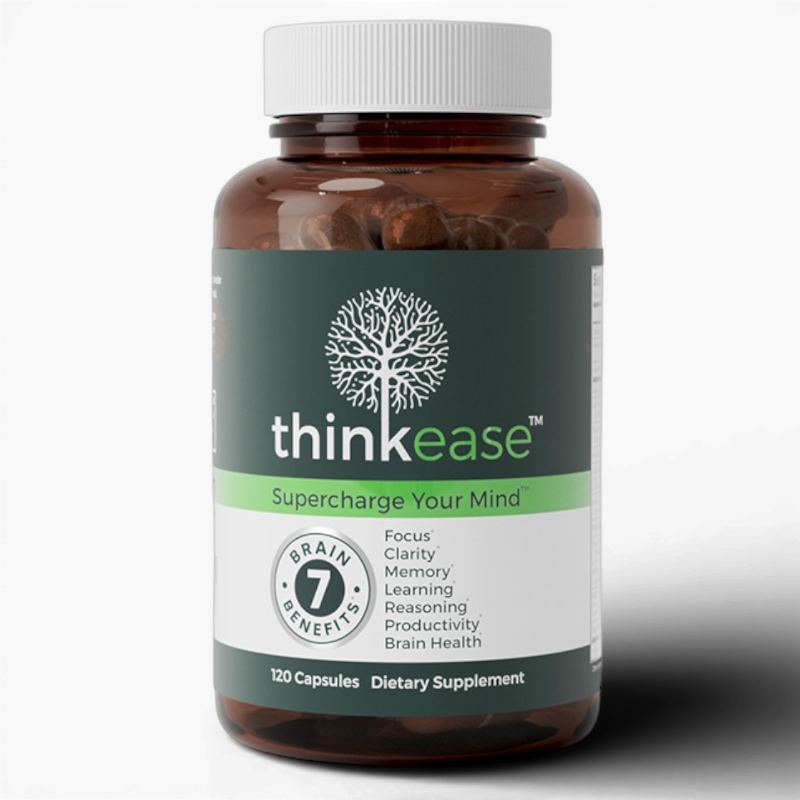
Highest rated nootropic
Why we recommend ThinkEase
- 250 mg of citicoline and 200 mg of L-theanine for focus during long sessions
- 300 mg of bacopa and 100 mg of phosphatidylserine for memory over the term
- Caffeine-free, so you control your caffeine around study and sleep
- From $44.99 a bottle on the five-month pack, with a 100-day money-back guarantee
Frequently asked questions
What is the best nootropic for studying?
ThinkEase is our top pick. It is caffeine-free and combines citicoline and L-theanine for focus with bacopa and phosphatidylserine for memory, all at research doses.
Do nootropics help with exams?
Caffeine with L-theanine can sharpen focus on the day, but memory ingredients such as bacopa need eight to twelve weeks, so start well before exam season. Sleep the night before matters more than any supplement.
Is it safe for students to take nootropics?
Our picks are for adults and are not suitable for anyone under 18. Adults should keep total caffeine under 400 mg a day and check with a doctor if they take medication, including ADHD medication.
Can nootropics replace Adderall for studying?
No. Adderall is a prescription stimulant, and taking it without a prescription is illegal and risky. Our guide to Adderall alternatives explains what supplements can and cannot do.
Final verdict
The best nootropic for studying is one you take consistently, alongside good sleep and smart study habits. ThinkEase covers focus, memory and mental fatigue without caffeine, which is why it is our top pick, with Rootana Pure Mind for students on a budget.
Sources and further reading
- ThinkEase official formula and Supplement Facts
- Rootana Pure Mind official product page and Supplement Facts
- MindVitality Focus official site and Supplement Facts
- Neuro ingredients and benefits (neurogum.com)
- Neuro Energy & Focus gum (neurogum.com)
- Calabrese et al. 2008, bacopa in adults over 65
- Chandrasekhar et al. 2012, KSM-66 ashwagandha, stress and cortisol
- Darbinyan et al. 2000, rhodiola in night-shift physicians
- Docherty et al. 2023, lion's mane in young adults
- Giesbrecht et al. 2010, L-theanine and caffeine on task switching
- Haskell et al. 2008, L-theanine, caffeine and their combination
- Hidese et al. 2019, four weeks of L-theanine in healthy adults
- Jang et al. 2008, systematic review of red ginseng for erectile function
- Jongkees et al. 2015, review of tyrosine under stress
- Kato-Kataoka et al. 2010, phosphatidylserine and memory in older adults
- Kell et al. 2017, affron saffron extract and mood
- Kongkeaw et al. 2014, meta-analysis of bacopa trials
- Lopresti et al. 2019, ashwagandha in ageing overweight men
- Lopresti et al. 2025, 12-week Bacumen bacopa trial
- Luzzi et al. 2011, pine bark extract in students
- McGlade et al. 2019, citicoline, attention and motor speed
- Michael et al. 2008, caffeine and alertness
- Montgomery et al. 2003, meta-analysis of acetyl-L-carnitine trials
- Mori et al. 2009, lion's mane in mild cognitive impairment
- NIH Office of Dietary Supplements, ashwagandha fact sheet
- Nakazaki et al. 2021, citicoline and memory in healthy older adults
- Olsson et al. 2009, rhodiola in stress-related fatigue
- Owen et al. 2008, L-theanine with caffeine on attention
- Reay et al. 2005, Panax ginseng and sustained mental activity
- Stough et al. 2001, 12 weeks of bacopa in healthy adults
- US FDA, how much caffeine is too much
- Wankhede et al. 2015, ashwagandha and strength training in men