Brain fog is the feeling of slow, cloudy thinking: losing words, forgetting why you walked into a room, struggling to concentrate. It is a symptom rather than a diagnosis, and it often has a simple cause such as poor sleep or stress. Memory supplements can help, but only a handful of ingredients have good human evidence behind them.
This guide covers the common causes of brain fog, the ingredients with the strongest research for memory and focus, and the supplements we rate highest.
Quick verdict
ThinkEase is our top pick for memory and brain fog. It combines the three ingredients with the best memory evidence, bacopa, citicoline and phosphatidylserine, at research doses, with L-theanine and rhodiola for focus and mental fatigue, and no caffeine. Rootana Pure Mind offers the same formula at a lower dose and price, and MindVitality Focus suits people whose brain fog comes with stress and fatigue.
Memory supplements pros and cons
What we like
- Bacopa, citicoline and phosphatidylserine have human trials showing memory benefits
- L-theanine and rhodiola can help with focus and mental fatigue
- Correcting a vitamin B12 shortfall can clear related brain fog
- Fully disclosed products let you check doses against the research
What could be better
- Bacopa's memory benefits take eight to twelve weeks
- Supplements will not fix brain fog caused by poor sleep or a medical problem
- Ginkgo, one of the most popular memory herbs, failed in large trials
- Many memory products hide their doses in proprietary blends
What causes brain fog?
The most common causes are everyday ones: short or broken sleep, stress, dehydration, skipped meals and too much alcohol. Hormonal changes, especially around menopause, are another frequent cause. Medical causes include low iron, low vitamin B12, an underactive thyroid, depression, some medicines and the after-effects of infections such as COVID-19.
If brain fog is sudden, getting worse, or comes with other symptoms such as weakness, numbness or confusion, see a doctor promptly. For fog that lingers for weeks, a doctor can check for common causes with simple blood tests.
The ingredients with the best evidence
- Bacopa: twelve-week trials of 300 mg a day of an extract standardized to about 50% bacosides improved memory in healthy adults and in people over 65.
- Citicoline: 500 mg a day for 12 weeks improved episodic memory in older adults with everyday memory complaints.
- Phosphatidylserine: 100 to 300 mg a day for six months improved memory in older adults with memory complaints, especially those who started with lower scores.
- Lutein and zeaxanthin: a year at about 10 mg of lutein and 2 mg of zeaxanthin a day improved attention and memory in trials.
- DHA: 900 mg a day of the omega-3 DHA improved learning and memory over six months in older adults with mild age-related memory decline.
- Vitamin B12: only helps if you are low, but shortfalls are common in older adults, vegans and people taking metformin.
For the foggy, tired feeling itself, L-theanine supports calm focus within hours, and rhodiola reduced mental fatigue in trials lasting two to four weeks.
What does not work as well
Ginkgo is one of the best-selling memory herbs, but large trials have been disappointing: 120 mg a day did not improve memory in healthy older adults, and 240 mg a day for about six years did not prevent dementia. Prevagen's apoaequorin is backed mainly by company research, and in December 2024 the FTC announced a court win over its memory claims, which the company has appealed. Products that hide their doses in proprietary blends are also hard to judge, because you cannot tell whether they contain research-level amounts.
1. ThinkEase: best overall for memory and focus
ThinkEase scores 9.5 out of 10. Its four capsules contain 300 mg of bacopa at 50% bacosides, 250 mg of citicoline and 100 mg of phosphatidylserine for memory, 200 mg each of L-theanine and rhodiola for focus and fatigue, plus 10 mg of lutein with 2 mg of zeaxanthin and 30 mg of saffron. It is caffeine-free and costs $74.99 a month, or $44.99 a bottle on the five-month pack, with a 100-day money-back guarantee. Read our ThinkEase review.
2. Rootana Pure Mind: the same formula for less
Pure Mind scores 9.1 out of 10. It contains the same 16 ingredients as ThinkEase at three quarters of the amount per three-capsule serving, and Rootana suggests four capsules for a stronger dose, which matches the research levels. It costs $39.99 for 28 days, or $29.99 a bottle on the 3 + 1 free pack. Read our Pure Mind review.
3. MindVitality Focus: for brain fog with stress and fatigue
MindVitality Focus scores 8.6 out of 10. It has no citicoline or L-theanine, but its 250 mg of rhodiola, 250 mg of ashwagandha and 100 mg of phosphatidylserine make it a good fit when brain fog comes with stress and tiredness. It costs $59.99 a month, or $35.99 a bottle on the five-month pack, with a 100-day money-back guarantee. Read our MindVitality review.
Our picks vs Neuriva Plus and Prevagen
| Feature | ThinkEaseOur pick | Rootana Pure MindOur pick | MindVitality FocusOur pick | Neuriva Plus | Prevagen Regular Strength |
|---|---|---|---|---|---|
| Hyperguides score | 9.5/10 | 9.1/10 | 8.6/10 | 6.8/10 | 3.8/10 |
| Daily serving | 4 capsules a day | 3 capsules a day (4 for a stronger dose) | 3 tablets a day with breakfast or lunch | 1 capsule a day | 1 capsule a day |
| Stimulants | Caffeine-free | Caffeine-free | Caffeine-free | Decaffeinated coffee fruit | Caffeine-free |
| Key ingredients | Bacopa 300 mg (50% bacosides), citicoline 250 mg, L-theanine 200 mg, phosphatidylserine 100 mg, plus 12 more | Bacopa 225 mg, citicoline 187.5 mg, L-theanine 150 mg, rhodiola 150 mg, plus 12 more | Lion's mane 500 mg, bacopa 300 mg, rhodiola 250 mg, ashwagandha 250 mg, plus 13 more | Coffee fruit extract 200 mg, Phosphatidylserine 100 mg | Apoaequorin 10 mg, Vitamin D3 50 mcg |
| Label transparency | Every dose disclosed, no blends | Every dose disclosed, no blends | Every dose disclosed, no blends | Every dose disclosed | Every dose disclosed |
| Price (one bottle) | $74.99 / 30 days | $39.99 / 28 days | $59.99 / 30 days | $48.00 / 30 days | $39.95 / 30 days |
| Cost per day | $2.50 | $1.43 | $2.00 | $1.60 | $1.33 |
| Money-back guarantee | 100-day money-back guarantee | Unopened bottles can be returned within 30 days (US and Canada) | 100-day money-back guarantee | See official site | See official site |
Our scores
ThinkEase
Hyperguides score
Rootana Pure Mind
Hyperguides score
MindVitality Focus
Hyperguides score
Neuriva Plus
Hyperguides score
Prevagen Regular Strength
Hyperguides score
How we score: formula and dosing 35%, ingredient evidence 25%, label transparency 20%, value and terms 20%. Read our rating method.
How to get the most from a memory supplement
Take it every day at the same time, with food if it contains bacopa, and give it at least eight to twelve weeks. Pair it with the basics that matter most: seven to nine hours of sleep, regular exercise and less alcohol. If your brain fog has a medical cause, treating that cause will do more than any supplement.
Why we recommend ThinkEase
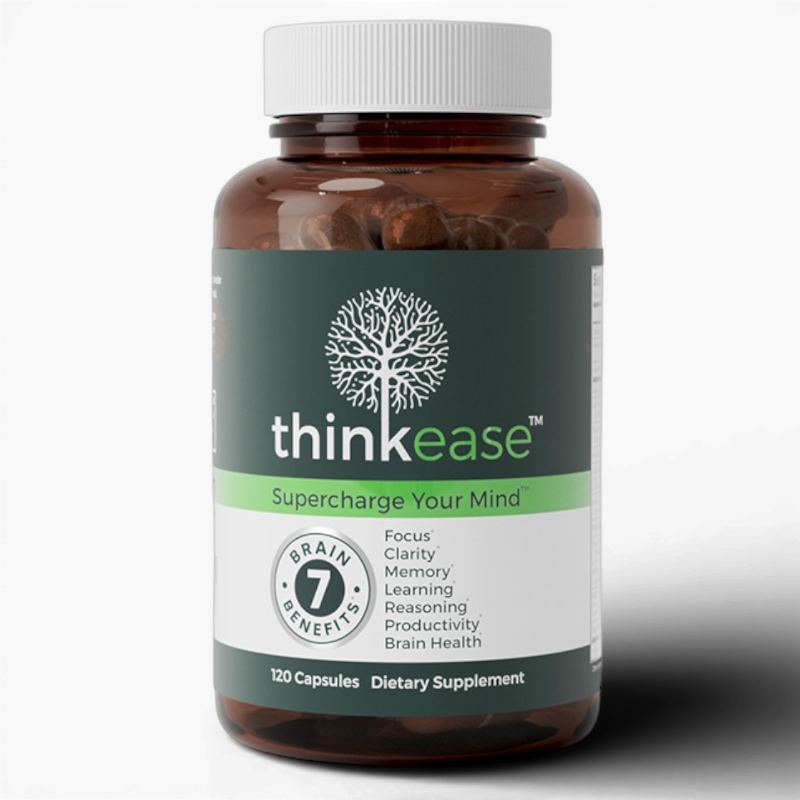
Highest rated nootropic
Why we recommend ThinkEase
- Bacopa, citicoline and phosphatidylserine, the three best-supported memory ingredients, at research doses
- 200 mg each of L-theanine and rhodiola for clearer focus and less mental fatigue
- Caffeine-free, with every one of its 16 doses on the label
- From $44.99 a bottle on the five-month pack, with a 100-day money-back guarantee
Frequently asked questions
What is the best supplement for memory?
Bacopa, citicoline and phosphatidylserine have the strongest human evidence. ThinkEase, our top pick, includes all three at research doses.
What is the best supplement for brain fog?
It depends on the cause. If a blood test shows you are low in vitamin B12 or iron, treating that helps most. For general brain fog, a caffeine-free formula with L-theanine, rhodiola and citicoline, such as ThinkEase, supports focus and mental energy.
How long do memory supplements take to work?
L-theanine can work within hours, but bacopa's memory benefits take eight to twelve weeks of daily use.
Does ginkgo help memory?
Large, well-run trials found it did not improve memory in healthy older adults or prevent dementia.
When should I see a doctor about brain fog?
See a doctor if it is sudden, getting worse or lasts for weeks, or if it comes with other symptoms such as weakness, numbness, confusion or low mood. Simple blood tests can check for common causes such as low iron, low vitamin B12 and thyroid problems.
Final verdict
Memory supplements work best when they use the ingredients with real evidence, at the doses that were tested, alongside good sleep and exercise. ThinkEase does that more completely than any other product we have reviewed, which is why it is our top pick for memory and brain fog.
Sources and further reading
- ThinkEase official formula and Supplement Facts
- Rootana Pure Mind official product page and Supplement Facts
- MindVitality Focus official site and Supplement Facts
- Neuriva ingredients (Schiff) (schiffvitamins.com)
- NIH DSLD label record for Neuriva Plus
- Doma et al. 2023, Neuriva-formula trial
- Prevagen Regular Strength official product page (prevagen.com)
- US FTC statement on the Prevagen lawsuit
- Calabrese et al. 2008, bacopa in adults over 65
- Chandrasekhar et al. 2012, KSM-66 ashwagandha, stress and cortisol
- Darbinyan et al. 2000, rhodiola in night-shift physicians
- Docherty et al. 2023, lion's mane in young adults
- Giesbrecht et al. 2010, L-theanine and caffeine on task switching
- Haskell et al. 2008, L-theanine, caffeine and their combination
- Hidese et al. 2019, four weeks of L-theanine in healthy adults
- Jang et al. 2008, systematic review of red ginseng for erectile function
- Jongkees et al. 2015, review of tyrosine under stress
- Kato-Kataoka et al. 2010, phosphatidylserine and memory in older adults
- Kell et al. 2017, affron saffron extract and mood
- Kongkeaw et al. 2014, meta-analysis of bacopa trials
- Lerchbaum et al. 2017, vitamin D and testosterone in healthy men
- Lopresti et al. 2019, ashwagandha in ageing overweight men
- Lopresti et al. 2025, 12-week Bacumen bacopa trial
- McGlade et al. 2019, citicoline, attention and motor speed
- Montgomery et al. 2003, meta-analysis of acetyl-L-carnitine trials
- Mori et al. 2009, lion's mane in mild cognitive impairment
- NIH Office of Dietary Supplements, ashwagandha fact sheet
- NIH Office of Dietary Supplements, vitamin B12 fact sheet
- NIH Office of Dietary Supplements, vitamin D fact sheet
- Nakazaki et al. 2021, citicoline and memory in healthy older adults
- Olsson et al. 2009, rhodiola in stress-related fatigue
- Owen et al. 2008, L-theanine with caffeine on attention
- Pilz et al. 2011, vitamin D supplementation and testosterone in men
- Reay et al. 2005, Panax ginseng and sustained mental activity
- Reyes-Izquierdo et al. 2013, coffee fruit extract and BDNF
- Robinson et al. 2020, coffee cherry extract in older adults
- Stough et al. 2001, 12 weeks of bacopa in healthy adults
- Wankhede et al. 2015, ashwagandha and strength training in men
- Yurko-Mauro et al. 2010, DHA in age-related cognitive decline