Focus Factor has been one of America's best-selling brain supplements for more than 25 years, and you will find it in most big-box stores. The Original formula combines a full multivitamin with a "synergistic and proprietary" cognitive blend, taken as four tablets a day.
We looked at what is actually in that blend, which ingredients raise questions, and whether the low price adds up to good value.
Quick verdict
Focus Factor is cheap and gives you a complete multivitamin, but its cognitive ingredients are hidden inside a 640 mg proprietary blend, so you cannot tell whether any of them reach useful doses. It also contains vinpocetine, which the FDA has warned against in pregnancy, and 15 mg of vitamin B6, above Europe's new daily upper limit. If you want a brain supplement rather than a multivitamin, ThinkEase is the far stronger choice.
Focus Factor pros and cons
What we like about Focus Factor
- Low price: $29.99 for 150 tablets, about 37 days
- Includes a full multivitamin and mineral panel
- Caffeine-free
- Widely available in stores
Where Focus Factor falls short
- 640 mg proprietary blend hides the dose of every cognitive ingredient
- Contains vinpocetine, which the FDA warns may harm a pregnancy
- 15 mg of vitamin B6, above the 12 mg upper limit set in Europe in 2023
- Four tablets a day for what is mostly a multivitamin
Focus Factor at a glance
| Made by | Synergy CHC |
|---|---|
| Daily serving | 4 tablets a day |
| Stimulants | Caffeine-free |
| Key ingredients | DMAE (amount hidden), Bacopa monnieri (amount hidden), Phosphatidylserine (amount hidden), DHA (amount hidden) |
| Label | 640 mg proprietary blend, individual amounts hidden |
| Price | $29.99 for 37 days ($29.99 for 150 tablets (about 37 days)) |
| Cost per day | $0.81 |
| Hyperguides score | 5.6/10 |
What is Focus Factor?
Focus Factor is made by Synergy CHC and sold in several versions, including Original, Extra Strength, Brain & Vision and kids' chewables. This review covers Focus Factor Original, the version most people buy.
Each four-tablet serving provides a broad vitamin and mineral panel plus the proprietary formulation, which lists DMAE, L-glutamine, Bacopin bacopa, L-pyroglutamic acid, phosphatidylserine, DHA, inositol, N-acetyl tyrosine, bilberry, GABA, grape skin and grape seed extracts, vinpocetine, huperzine A, boron and vanadium.
Focus Factor ingredients and doses
The vitamins and minerals are listed individually. The cognitive ingredients are not, so we can only show the blend total.
| Ingredient | Per daily serving | What research used | Our read |
|---|---|---|---|
| Proprietary blend: Synergistic and Proprietary Formulation | 640 mg | Individual amounts hidden | Not disclosed |
| DMAE (in blend) | Not disclosed | No effective dose established | Not disclosed |
| Bacopa monnieri (Bacopin, in blend) | Not disclosed | 300 mg a day of extract standardized to about 50% bacosides (about 150 mg of bacosides) | Not disclosed |
| Phosphatidylserine (in blend) | Not disclosed | 100 to 300 mg a day | Not disclosed |
| DHA (in blend) | Not disclosed | About 900 mg a day | Not disclosed |
| Huperzine A (in blend) | Not disclosed | 200 to 400 mcg a day | Not disclosed |
| Vinpocetine (in blend) | Not disclosed | Not recommended in pregnancy | Not disclosed |
| Vitamin B6 | 15 mg | Daily need 1.7 mg; upper limit 12 mg | Above upper limit |
| Vitamin B12 | 20 mcg | Daily need 2.4 mcg | 833% of daily need |
| Magnesium | 100 mg | Daily need 420 mg; upper limit 350 mg | 24% of daily need |
Bacopa monnieri (amount not disclosed)
The research dose is 300 mg a day of an extract with roughly 40 to 55% bacosides, taken for at least 12 weeks. At that level, trials show modest gains in memory and processing speed, though not every study finds an effect. Taking it with food reduces the mild stomach upset some people notice.
Because the amount is hidden (it sits inside the 640 mg Synergistic and Proprietary Formulation), you cannot tell whether Focus Factor gets anywhere near the 300 mg a day of extract standardized to about 50% bacosides (about 150 mg of bacosides) used in studies.
Phosphatidylserine (amount not disclosed)
In a six-month trial, older adults with memory complaints taking 100 or 300 mg of soy-derived phosphatidylserine a day improved on memory tests, especially those who started with lower scores. The FDA allows only a qualified health claim for it, describing the evidence as limited.
Focus Factor does not disclose how much it contains (it sits inside the 640 mg Synergistic and Proprietary Formulation), so there is no way to check it against the 100 to 300 mg a day used in research.
DHA (amount not disclosed)
In a 24-week trial of adults over 55 with age-related cognitive decline, 900 mg of DHA a day improved learning and memory. Much smaller amounts have little evidence behind them.
Because the amount is hidden (it sits inside the 640 mg Synergistic and Proprietary Formulation), you cannot tell whether Focus Factor gets anywhere near the about 900 mg a day used in studies.
Huperzine A (amount not disclosed)
Huperzine A works like a mild version of some dementia drugs. Reviews of trials, mostly from China, suggest benefits in Alzheimer's disease at 200 to 400 mcg a day, but study quality is low. It can cause nausea and a slower heart rate.
Because the amount is hidden (it sits inside the 640 mg Synergistic and Proprietary Formulation), you cannot tell whether Focus Factor gets anywhere near the 200 to 400 mcg a day used in studies. Because it acts like a drug, it should not be combined with prescription dementia medicines.
Vinpocetine (amount not disclosed)
Vinpocetine is marketed for blood flow to the brain, with limited evidence in healthy adults. In 2019 the FDA warned that it may cause miscarriage or harm fetal development and should not be taken by women who are or could become pregnant.
Focus Factor does not disclose how much it contains (it sits inside the 640 mg Synergistic and Proprietary Formulation), so there is no way to check it against the not recommended in pregnancy used in research.
DMAE (amount not disclosed)
DMAE was popular decades ago, but there is no good modern evidence that it improves cognition in healthy adults.
Because the amount is hidden (it sits inside the 640 mg Synergistic and Proprietary Formulation), you cannot tell whether Focus Factor gets anywhere near the no effective dose established used in studies.
- Besides the cognitive blend, each serving is a full multivitamin and mineral, including 15 mg of vitamin B6.
Does Focus Factor work?
Focus Factor says its formula was tested in a double-blind, placebo-controlled study. Even so, the proprietary blend makes it impossible to connect the product to the wider research on its ingredients. Seventeen ingredients share 640 mg, while research doses for just bacopa (300 mg) and phosphatidylserine (100 to 300 mg) would take up most of that on their own, before DHA, which is studied at around 900 mg a day.
If you are low in some vitamins or minerals, the multivitamin side of Focus Factor may help you feel better. As a targeted brain supplement, it is unlikely to deliver research-level doses of its cognitive ingredients.
Focus Factor side effects and safety
Most people tolerate Focus Factor well, though the multivitamin can cause nausea if taken on an empty stomach. Two ingredients deserve a closer look:
- Vinpocetine. In 2019 the FDA warned that vinpocetine may cause miscarriage or harm fetal development and should not be taken by women who are pregnant or could become pregnant.
- Vitamin B6. At 15 mg a day, Focus Factor exceeds the 12 mg upper limit set by the European Food Safety Authority in 2023 because of the risk of nerve problems with long-term high intake. The US limit is higher, at 100 mg, but stacking Focus Factor with another B6-containing supplement is best avoided.
Huperzine A also acts on the same enzyme as some dementia drugs, so it should not be combined with them.
Focus Factor price and value
Focus Factor Original costs $29.99 for 150 tablets on the official store, which lasts about 37 days at four tablets a day. That is cheap, but most of what you can verify on the label is a standard multivitamin, which costs less still. ThinkEase costs more at $74.99 a month, but every one of its 16 cognitive ingredients is disclosed and dosed.
Focus Factor vs ThinkEase
| Feature | Focus Factor Original | ThinkEaseOur pick |
|---|---|---|
| Hyperguides score | 5.6/10 | 9.5/10 |
| Daily serving | 4 tablets a day | 4 capsules a day |
| Stimulants | Caffeine-free | Caffeine-free |
| Key ingredients | DMAE (amount hidden), Bacopa monnieri (amount hidden), Phosphatidylserine (amount hidden), DHA (amount hidden) | Bacopa 300 mg (50% bacosides), citicoline 250 mg, L-theanine 200 mg, phosphatidylserine 100 mg, plus 12 more |
| Label transparency | 640 mg proprietary blend, individual amounts hidden | Every dose disclosed, no blends |
| Price (one bottle) | $29.99 / 37 days | $74.99 / 30 days |
| Cost per day | $0.81 | $2.50 |
| Money-back guarantee | See official site | 100-day money-back guarantee |
Our scores
Focus Factor Original
Hyperguides score
ThinkEase
Hyperguides score
How we score: formula and dosing 35%, ingredient evidence 25%, label transparency 20%, value and terms 20%. Read our rating method.
Why we recommend ThinkEase
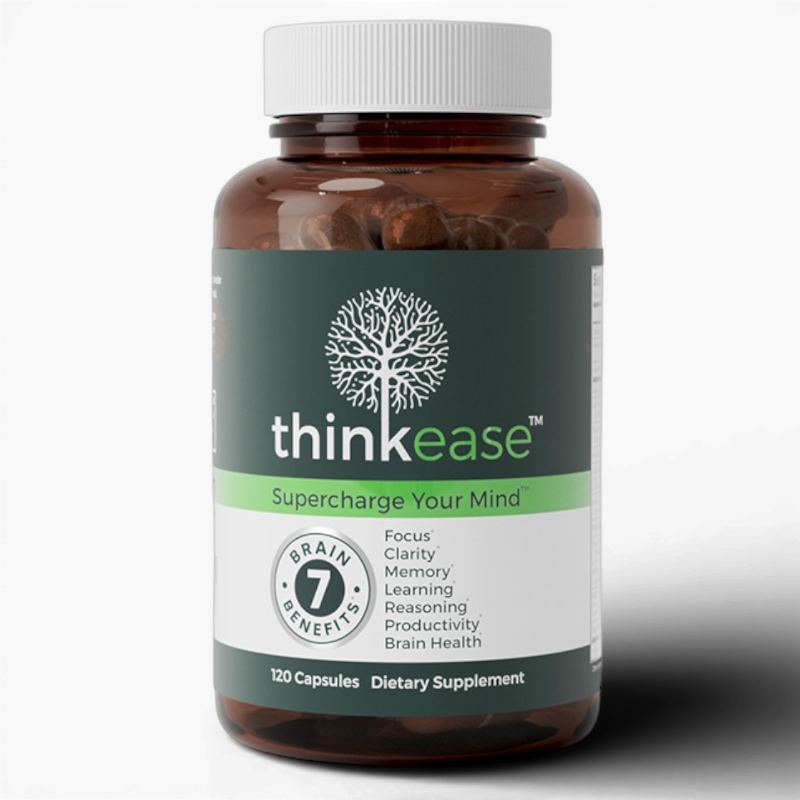
Highest rated nootropic
Why we recommend ThinkEase
- A dedicated brain formula: 16 cognitive ingredients with every dose on the label, rather than a multivitamin with a hidden blend
- 300 mg of bacopa and 100 mg of phosphatidylserine you can verify, plus 250 mg of citicoline and 200 mg of L-theanine
- No vinpocetine and a sensible 2.5 mg of vitamin B6
- Caffeine-free, with a 100-day money-back guarantee
Who should buy Focus Factor?
Focus Factor suits someone who mainly wants a cheap multivitamin and likes the idea of a few cognitive ingredients on top. It is not a good choice for anyone who is or could become pregnant, or for people who want to know exactly what dose of each brain ingredient they are taking.
Frequently asked questions
What are the side effects of Focus Factor?
Most people have no problems, though the multivitamin can cause nausea on an empty stomach. It contains vinpocetine, which the FDA warns against in pregnancy, and 15 mg of vitamin B6, above Europe's 12 mg daily upper limit.
Does Focus Factor really work?
The brand cites a placebo-controlled study, but its cognitive ingredients are hidden in a 640 mg proprietary blend, so the doses cannot be checked against the research. Its multivitamin may help if your diet is lacking.
Is Focus Factor safe to take every day?
For most adults it is, but avoid it if you are or could become pregnant, and do not combine it with other supplements that contain vitamin B6 or with prescription dementia medicines.
What is better than Focus Factor?
ThinkEase is our top-rated nootropic. It discloses every dose, includes research-level bacopa, citicoline and L-theanine, contains no vinpocetine and comes with a 100-day money-back guarantee.
Final verdict
Focus Factor is a decent multivitamin wrapped in brain-supplement marketing, with a blend you cannot verify and a couple of ingredients worth avoiding for some people. If your goal is focus and memory support, ThinkEase is the product we recommend.
Sources and further reading
- Focus Factor Original official product page (focusfactor.com)
- NIH DSLD label record for Focus Factor
- ThinkEase official formula and Supplement Facts
- Calabrese et al. 2008, bacopa in adults over 65
- Kato-Kataoka et al. 2010, phosphatidylserine and memory in older adults
- Kongkeaw et al. 2014, meta-analysis of bacopa trials
- Li et al. 2008, Cochrane review of huperzine A
- Lopresti et al. 2025, 12-week Bacumen bacopa trial
- RAPS, FDA warns pregnant women not to take vinpocetine (2019)
- Stough et al. 2001, 12 weeks of bacopa in healthy adults
- Yang et al. 2013, meta-analysis of huperzine A trials
- Yurko-Mauro et al. 2010, DHA in age-related cognitive decline