Focus Factor and Qunol Brain Health sit on the same pharmacy shelves, but they are built very differently. Focus Factor is a multivitamin with a proprietary cognitive blend, taken as four tablets a day. Qunol Brain Health Memory Plus is a two-tablet formula of citicoline and magnesium L-threonate.
Shoppers also often compare Focus Factor with Neuriva, so we have covered that too.
Quick verdict
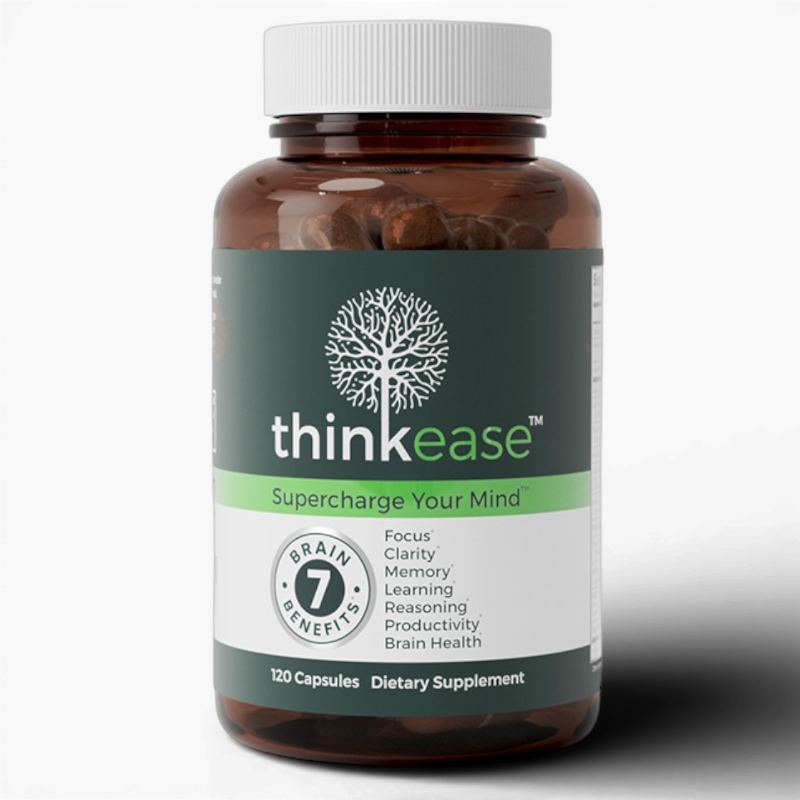
Qunol Brain Health wins. Its 500 mg of Cognizin citicoline is a full research dose with every amount disclosed, while Focus Factor hides its cognitive doses in a 640 mg blend and includes vinpocetine and 15 mg of vitamin B6. Neuriva also beats Focus Factor as a brain supplement. ThinkEase beats them all, combining citicoline with 300 mg of bacopa and 100 mg of phosphatidylserine.
Focus Factor vs Qunol Brain Health: pros and cons
What we like
- Qunol: 500 mg of citicoline, a research dose, fully disclosed
- Qunol: two tablets a day, caffeine-free
- Focus Factor: low price and a full multivitamin
- Focus Factor: widely available
What could be better
- Focus Factor: a 640 mg blend hides every cognitive dose
- Focus Factor: vinpocetine, which the FDA warns against in pregnancy
- Qunol: only two ingredients
- Qunol: Magtein supplies only about 72 mg of elemental magnesium
Focus Factor at a glance
Focus Factor Original contains a full multivitamin plus a 640 mg blend including DMAE, bacopa, phosphatidylserine, DHA, huperzine A and vinpocetine, in four tablets a day, at $29.99 for 150 tablets. See our Focus Factor review.
Qunol Brain Health at a glance
Qunol Brain Health Memory Plus contains 500 mg of Cognizin citicoline and 1,000 mg of Magtein, in two tablets a day, at $44.99. Focus Plus has 250 mg of citicoline at $34.99.
Focus Factor vs Qunol Brain Health ingredients
| Ingredient | Focus Factor | Qunol Brain Health | What research used |
|---|---|---|---|
| DMAE | In blend, amount hidden | None | No effective dose established |
| Bacopa monnieri | In blend, amount hidden | None | 300 mg a day of extract standardized to about 50% bacosides (about 150 mg of bacosides) |
| Phosphatidylserine | In blend, amount hidden | None | 100 to 300 mg a day |
| DHA | In blend, amount hidden | None | About 900 mg a day |
| Huperzine A | In blend, amount hidden | None | 200 to 400 mcg a day |
| Vinpocetine | In blend, amount hidden | None | Not recommended in pregnancy |
| Vitamin B6 | 15 mg | None | Daily need 1.7 mg; upper limit 12 mg |
| Vitamin B12 | 20 mcg | None | Daily need 2.4 mcg |
| Magnesium | 100 mg | None | Daily need 420 mg; upper limit 350 mg |
| Citicoline | None | 500 mg | 250 to 500 mg a day |
| Magnesium L-threonate (Magtein) | None | 1,000 mg | About 1 to 2 g of the compound in studies |
| Synergistic and Proprietary Formulation | 640 mg total | None | Proprietary blend |
Key differences
Evidence
Qunol wins. Citicoline has improved attention and memory in several trials at 250 to 500 mg a day. Focus Factor's blend is too small to contain research doses of its many ingredients.
Safety
Qunol is simple and well tolerated. Focus Factor contains vinpocetine, 15 mg of vitamin B6, above Europe's 12 mg upper limit, and huperzine A.
Price
Focus Factor is about $0.81 a day; Qunol Memory Plus about $1.50.
What about Neuriva?
Neuriva Plus combines coffee fruit extract and phosphatidylserine, fully disclosed, and its formula improved several memory and focus tasks in a 2023 trial. As a brain supplement, it is a better choice than Focus Factor. See our Neuriva review.
Focus Factor, Qunol and ThinkEase side by side
| Feature | Focus Factor Original | Qunol Brain Health Memory Plus | ThinkEaseOur pick |
|---|---|---|---|
| Hyperguides score | 5.6/10 | 7.4/10 | 9.5/10 |
| Daily serving | 4 tablets a day | 2 tablets a day | 4 capsules a day |
| Stimulants | Caffeine-free | Caffeine-free | Caffeine-free |
| Key ingredients | DMAE (amount hidden), Bacopa monnieri (amount hidden), Phosphatidylserine (amount hidden), DHA (amount hidden) | Citicoline 500 mg, Magnesium L-threonate (Magtein) 1,000 mg | Bacopa 300 mg (50% bacosides), citicoline 250 mg, L-theanine 200 mg, phosphatidylserine 100 mg, plus 12 more |
| Label transparency | 640 mg proprietary blend, individual amounts hidden | Every dose disclosed | Every dose disclosed, no blends |
| Price (one bottle) | $29.99 / 37 days | $44.99 / 30 days | $74.99 / 30 days |
| Cost per day | $0.81 | $1.50 | $2.50 |
| Money-back guarantee | See official site | See official site | 100-day money-back guarantee |
Our scores
Focus Factor Original
Hyperguides score
Qunol Brain Health Memory Plus
Hyperguides score
ThinkEase
Hyperguides score
How we score: formula and dosing 35%, ingredient evidence 25%, label transparency 20%, value and terms 20%. Read our rating method.
Why we recommend ThinkEase
Highest rated nootropic
Why we recommend ThinkEase
- 250 mg of citicoline plus 300 mg of bacopa and 100 mg of phosphatidylserine
- Every one of its 16 doses disclosed, with no vinpocetine or huperzine A
- 200 mg of L-theanine, rhodiola and saffron at research doses
- Caffeine-free, with a 100-day money-back guarantee
Frequently asked questions
Is Qunol Brain Health better than Focus Factor?
Yes. Its 500 mg of citicoline is a full research dose and fully disclosed, while Focus Factor hides its cognitive doses.
Is Focus Factor or Neuriva better?
Neuriva, as a brain supplement. Its formula is disclosed and was tested in a 2023 trial. Focus Factor is mainly a multivitamin with a hidden blend.
What is better than all three?
ThinkEase is our top-rated nootropic, with citicoline, bacopa and phosphatidylserine at research doses and a 100-day money-back guarantee.
Final verdict
Qunol Brain Health and Neuriva both beat Focus Factor as brain supplements. ThinkEase covers more of the evidence in one disclosed formula, which is why it is our top pick.
Sources and further reading
- Focus Factor Original official product page (focusfactor.com)
- NIH DSLD label record for Focus Factor
- Qunol Brain Health Memory Plus (qunol.com)
- Qunol Brain Health Focus Plus (qunol.com)
- ThinkEase official formula and Supplement Facts
- Calabrese et al. 2008, bacopa in adults over 65
- Kato-Kataoka et al. 2010, phosphatidylserine and memory in older adults
- Kongkeaw et al. 2014, meta-analysis of bacopa trials
- Li et al. 2008, Cochrane review of huperzine A
- Liu et al. 2016, magnesium L-threonate (MMFS-01) in older adults
- Lopresti et al. 2025, 12-week Bacumen bacopa trial
- McGlade et al. 2019, citicoline, attention and motor speed
- Nakazaki et al. 2021, citicoline and memory in healthy older adults
- RAPS, FDA warns pregnant women not to take vinpocetine (2019)
- Stough et al. 2001, 12 weeks of bacopa in healthy adults
- Yang et al. 2013, meta-analysis of huperzine A trials
- Yurko-Mauro et al. 2010, DHA in age-related cognitive decline